2,023 hearts
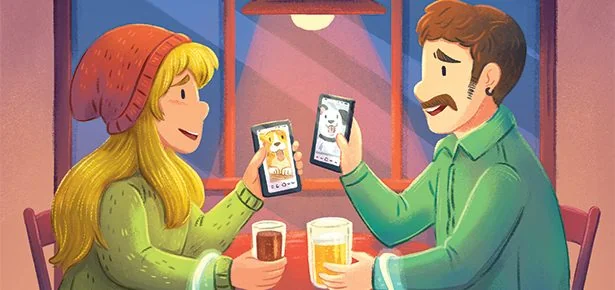
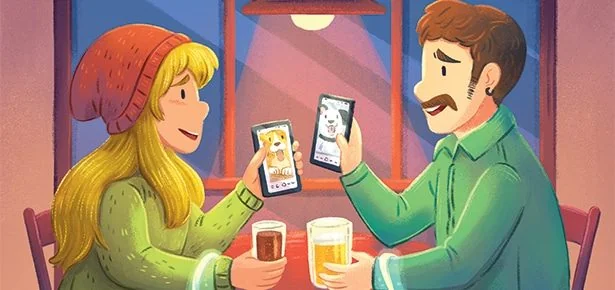
The night Richie and I met — a bone-chilling January evening in 2012 at a South Boston dive bar — our first conversation centered on three things: our miserable noses (Richie's allergies are catastrophic, and I was just fighting off a sinus infection), our obsession with big American cars (he was driving a 1986 Chevrolet El Camino; my first ride had been my grandparents' 1993 Cadillac Sedan DeVille), and — of all things — our dead dogs. Richie and his family had put down their beloved Cocoa just a month before, in December 2011. Though my childhood dog Gus had been gone for over five years by then, listening to Richie describe watching Cocoa collapse, and how the vet hadn't warned them how fast it would happen, brought every old sorrow roaring back. It was difficult to hear, and yet it felt strangely good to share. Richie missed Cocoa; I missed Gus. Here was a man who didn't find it the least bit weird to get choked up over bottles of Narragansett talking about the dogs we'd lost.
Soon after, I relocated to New York for an MFA program while Richie stayed put in Boston. We weren't officially a couple then, but we stayed in touch, and I'd pass along updates from my parents about how my other childhood dog, Gwen, was starting to fade. By July 2013 — a year and a half after we'd met — I was home at my parents' summer house between grad-school semesters, and the time had come for Gwen. She was euthanized at a small veterinary clinic in Connecticut, and we carried her home and buried her in the yard beneath a radiant blue hydrangea bush.
When I texted Richie that Gwen was gone, he knew exactly how to show up for me. He called that afternoon, after we'd laid her to rest, and we talked for close to an hour. Richie gave me the space to remember Gwen — how she'd hide behind the bathroom door whenever a thunderstorm rolled in, how in her "cocktail years" she'd turned up her nose at store-bought food and only ate the chicken my mom lovingly cooked, how she'd flush pheasants from the tall grass, how she'd always get carsick, the one time she killed a snake, and how she'd tuck herself into the corner of the couch beside you. Talking to Richie, I could recall every ridiculous, joyful thing about Gwen — and that reminded me why having a dog is worth every ounce of pain, even as I was drowning in it. I was grieving so intensely only because it had all been so good, and I realized I wouldn't trade a single minute of it to spare myself this.
"It's like choosing never to date or love someone because you might break up one day," Richie said. Better to have loved and lost, I thought, than never to have loved at all.
Richie kept checking in, texting to see how I was holding up, and he sent a sympathy card along with David Bowie's album Low on vinyl to cheer me because I was feeling so — well — "low." He just got it. Gwen was still gone and it still stung, but it meant everything to feel understood.
After finishing my program in New York, I moved back to Massachusetts, into a Cambridge apartment where Richie eventually joined me. He brought his bass and guitar, his fish tanks and bonsai trees, and, of course, his dead dog's leash.
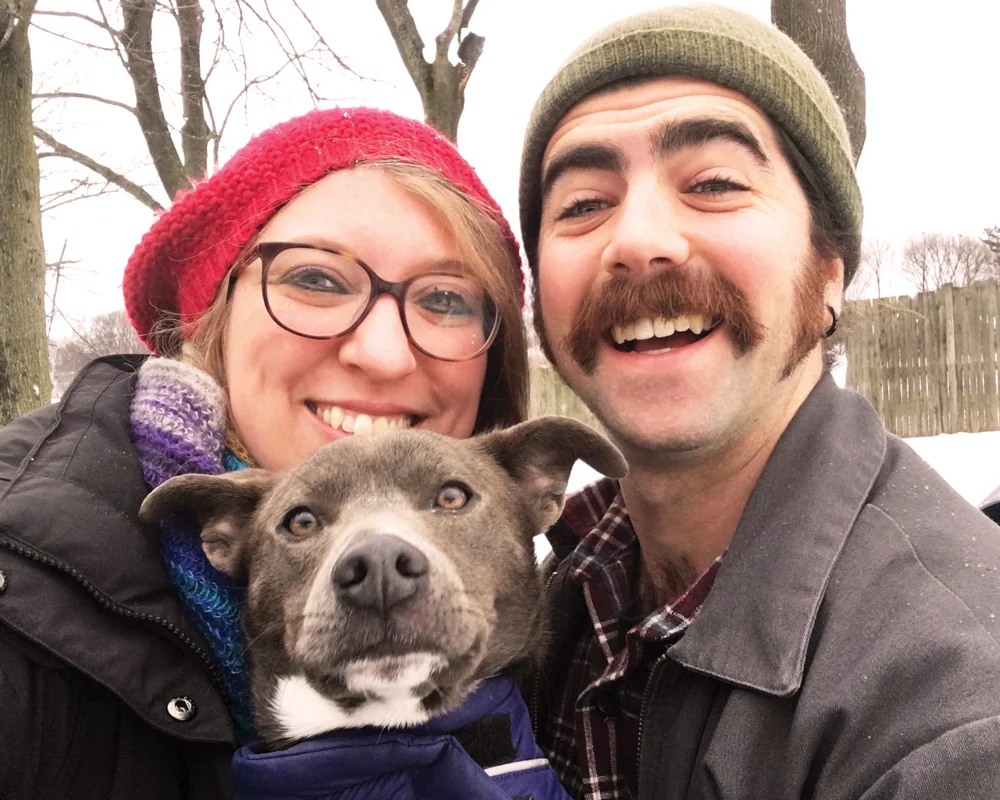
"This was Cocoa's," he told me, holding up a worn green leash as he unpacked. "We have to hang it by the door." I didn't question it — people do whatever they need to keep their pets close. Richie explained: "That way, if there's ever a fire, I can grab it on my way out." I nodded; it made perfect sense. We hammered a nail into the wall, and the leash dangled by the door as if Cocoa's ghost might be ready for a walk at any moment. The lonely strip of green looked so out of place against the white wall. We stood studying it together, and then I said, "Wait, I have something to add."
I headed to the bedroom and to my jewelry box, where, tangled among my rings and pins and beads and buttons, lay two collars — a thick, weathered blue one that had belonged to Gus, and a thinner, cleaner pink one patterned with white paw prints that had been Gwen's. I hung both collars on the same nail, right beside the leash. "Now, if there's a fire, they'll all be together."
Richie nodded. He understood — and more than that, I could feel him honoring my grief and my love for the pets I'd lost, letting it have space in our home. Pets are family, and Richie knows you don't tell someone to "get over" losing a family member. He knows that even long after a pet is gone, talking about them and sharing favorite memories is how we keep them alive. And it's not just Richie who gets it — both our families do. Growing up, my dad told me stories about his old dogs, Prince and Brand, and I thought of them as family elders in the same way I thought of my great-grandparents or far-flung cousins. When I first visited Richie's parents' home, I immediately noticed the framed photo of Cocoa beside her ashes and a small stuffed brown dog on the bookshelf.
By 2018 — for all these reasons and a thousand more — I already knew Richie was the man I wanted beside me for life, but the moment that truly sealed the deal came when my parents told me they were going to sell the summer house. I understood their reasoning: too much house, too much upkeep, too many expenses, and they were getting on in years. But I wasn't hearing any of it — all I could think about was Gwen. If my parents sold that place, what would become of the remains of a fourteen-year-old Cairn Terrier buried beneath a hydrangea bush in the backyard?
Even death, it turns out, is impermanent. There is no final resting place. I knew my parents wouldn't keep the house forever — with us kids grown, they didn't need all that space. I'd known it was coming. And yet, none of that crossed my mind when we buried Gwen in that yard. In our grief, at the moment, it simply felt like the right thing. Gwen adored that house. In summer, when the heat got too much, she'd lie beneath the hydrangea bush, savoring the cool shade of its blue blossoms. This is where she'd want to rest forever, I'd thought then. But now, with the house about to be sold, my breath came fast and shallow. Would Gwen forgive us for selling the ground out from under her?
"In fact, I was only feeling such terrible grief because it had all been so good."
I started crying the moment I hung up with my parents, and before I could even explain, Richie wrapped his arms around me and said, "If you and your parents want, I'll dig her up." I cried even harder — now not from losing Gwen's resting place, but from an overwhelming rush of gratitude for how generous and patient Richie was in that instant. No one, it seemed, understood dead pets the way Richie did, and here he was offering to exhume my dog who'd been gone five years, if that's what my family and I wanted.
In those moments watching Gus and Gwen sink onto the vet's cold stainless-steel table, pink tongues flopping at unnatural angles, I felt so alone — but I wasn't. I never was. My parents were in the room with me — they got it. The vet was there, too — she got it. So did the vet techs and the clinic's front-desk staff — they got it. The people who commented on my Facebook memorial posts, who mailed sympathy cards, who texted to check on me — they got it. Richie, his family, my friends — they all got it. When you love animals, you have to find your people. It may sound backward, but that's what it's really all about. When the animal you love dies, what you need most to survive it is a community of fellow humans who understand. When Richie and I finally married in the summer of 2021, I knew we'd have each other in sickness and in health, through the hard times and the good — and we'd be there for each other every single time a beloved animal died.
In the end, my parents sold the house, and we left Gwen in her spot beneath the hydrangea bush. That house was where she'd been happiest, and it felt right for her to stay. On the final weekend we spent there before the new owners took over, Richie and I walked the grounds, visiting her grave. I squeezed his hand, knowing what he'd been willing to do for me, because he gets it. And I smiled, picturing a little dog ghost haunting the backyard.
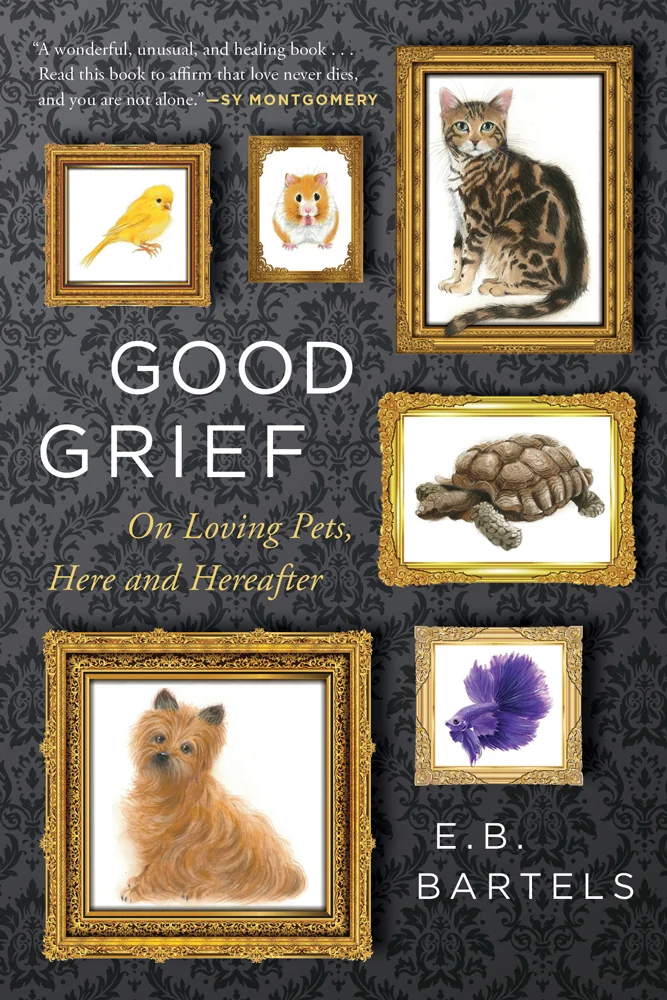
E.B. Bartels is the author of Good Grief: On Loving Pets, Here and Hereafter, available now from Mariner Books/HarperCollins.
First featured in the award-winning Modern Dog magazine. Subscribe today!
By clicking the arrow, you agree to our web Terms of Use and Privacy & Cookie Policy. Easy unsubscribe links are in every email.
keep the journal open