4,292 hearts
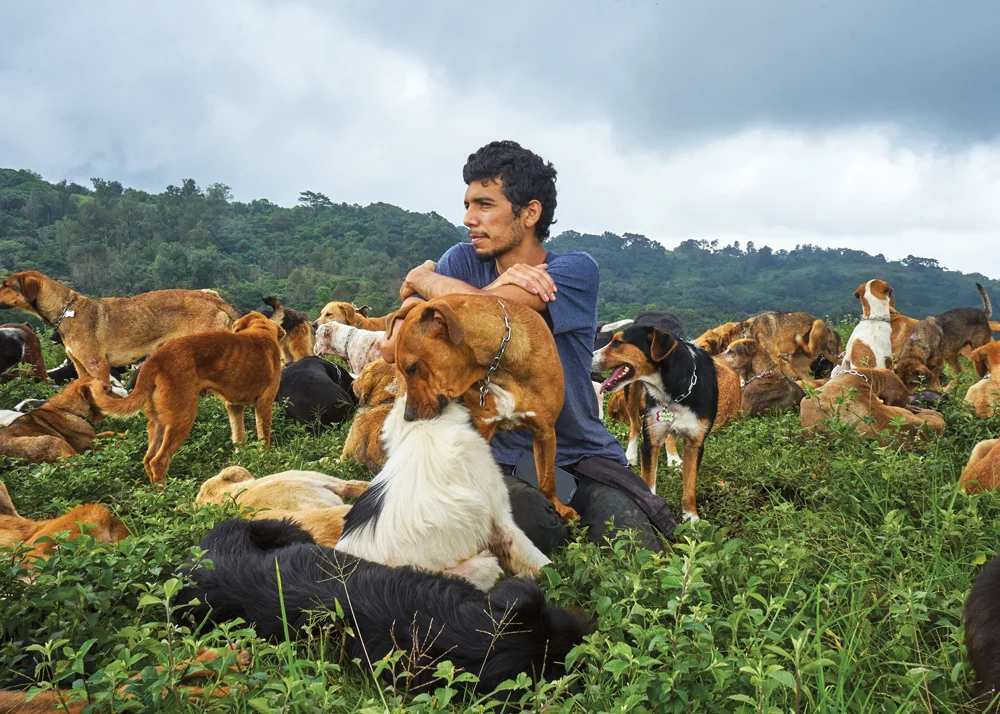
Volunteer José Rojas shares a quiet beat with his beloved dog Franco, who has narcolepsy, as rain clouds gather on a late morning. Photo by Dan Giannopoulos
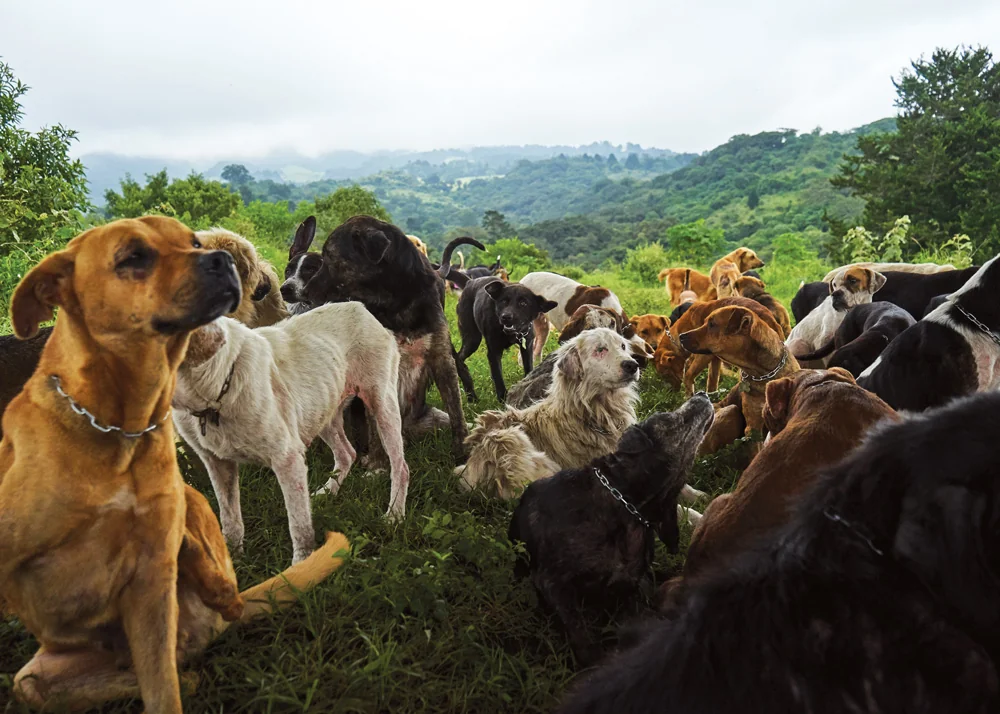
Tucked into Costa Rica's fertile mountains near Heredia, about an hour outside San José, sits a 350-acre farm and sanctuary called Territorio de Zaguates. Near-constant rainfall keeps its rolling green hills lush and its streams crystal-clear. The owners let the native trees and landscape grow wild—a striking counterpoint to the neighbouring farms razed for cattle.
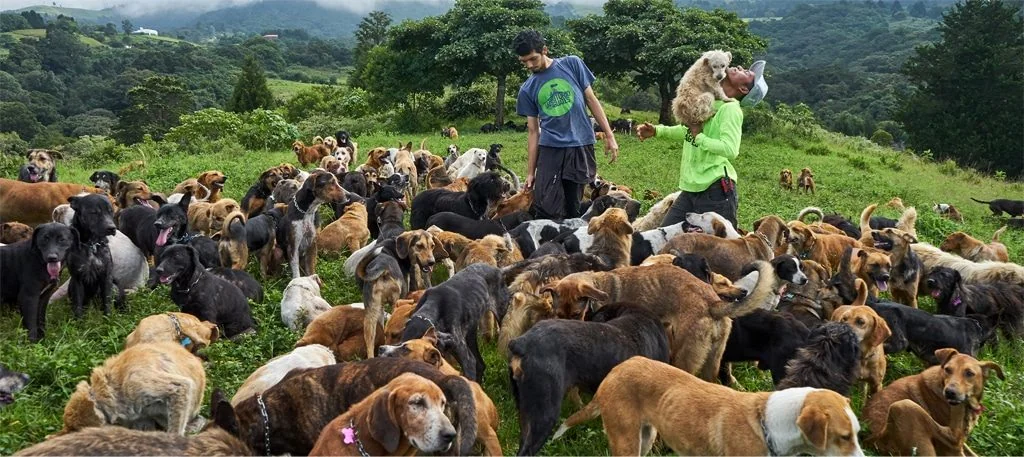
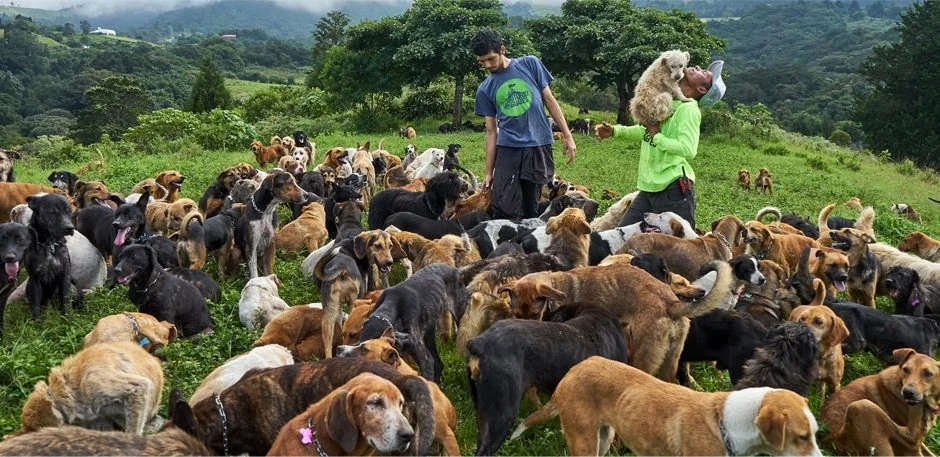
Something does run through these fields, but it's not livestock—it's dogs. More than 2,000 of them.
Owner Lya Battle inherited the land from her father—it originally belonged to her grandfather, who chose it for its picture-perfect views. She had no idea what to do with it until, about a decade ago, she opened Territorio de Zaguates, a dog sanctuary and shelter. Today she runs it with her husband, Alvaro Saumet, and five full-time caretakers caring for 2,000-plus dogs. 'Imagine this,' Lya says, setting the scene by phone. 'Each day we open the enclosures and let the dogs roam free. We take them on a four-kilometre walk through the pastures, they splash through rivers, roll in the grass, chase birds… It's pretty close to paradise. Especially because it's full of dogs.'
The dogs rest before heading back to the main farm for feeding time. Photo by Dan Giannopoulos
Though she's always adored animals, Lya spent her early years unaware of how bad San José's stray crisis had become. That changed when she and her husband moved to a suburban neighbourhood nearly 15 years ago and encountered strays around every corner—including one strikingly beautiful dog with an eye problem. 'Picture a handsome Husky, but with two shades of yellow, probably crossed with a Shar Pei because he had these little triangular ears,' she recalls. Lya was smitten; she took the stray to the vet to fix his eyes, planning to find an owner afterward. 'That was the first time I thought about holding on to a dog until someone wanted him—which turned out to be his whole life, because nobody ever did.'
Named Oso ('Bear' in Spanish), the golden-hued dog marked the beginning of a life's mission that far outgrew anything Lya imagined. 'I realized there are so many dogs with no home and simply no options,' she says. 'They're risking their lives on the street, or waiting out their due date to be euthanized in a shelter. That's it. And that became a haunting feeling for me.'
José Soto, a local caretaker, sits with the dogs during a rest break on their daily walk. Photo by Dan Giannopoulos
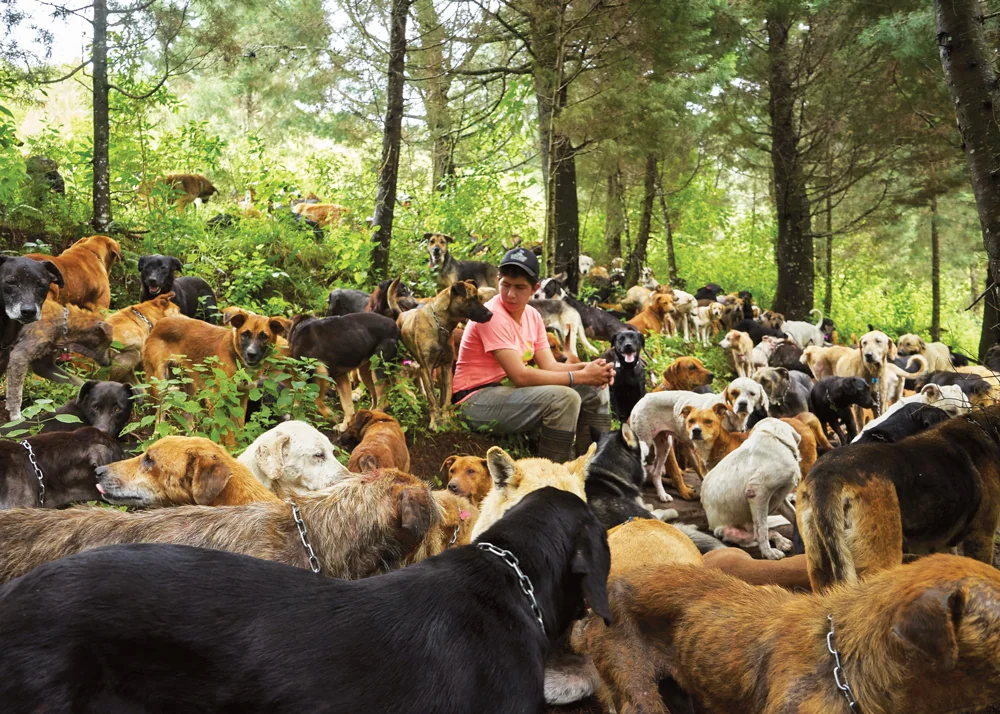
One by one she added to her rescue count—but once the tally passed 100, moving them to the farm was the natural next step, despite naysayers who doubted large mixed packs could coexist in peace. Quite the opposite: Lya's merry band of strays thrived as a herd, with newcomers learning the ropes from the old guard. (It also helps that every dog is spayed or neutered.)
At Territorio de Zaguates, every dog is a full member of one big family, and every dog gets its own name. A huge part of Lya's work is adopting them out—not only across Central America, but to homes in the United States and Canada, too. Would-be families are carefully screened in advance, yet even so, dogs are welcome back if anything goes wrong. 'I always tell people, "There's no expiry date on this adoption. We won't even ask questions,"' says Lya. 'If you can't have them anymore, for any reason, bring them back.' It's sad to see a dog returned, but Lya finds deep comfort knowing they're safe.
Almost 15 years ago, adopting a dog was nearly unheard of in Costa Rica. Lya stresses how much educating remains—not only about adoption, but about proper pet care in general. 'People always want puppies too, so we have to teach them about adopting adults,' she adds. These days new dogs usually arrive thanks to tips about abandoned animals, and while adoptions move faster than they used to, they could always be quicker.
Lya Battle and her husband Alvaro Saumet founded the Territorio de Zaguates sanctuary. Photo by Paola Bonilla Fong (IG:ppunto.photo)
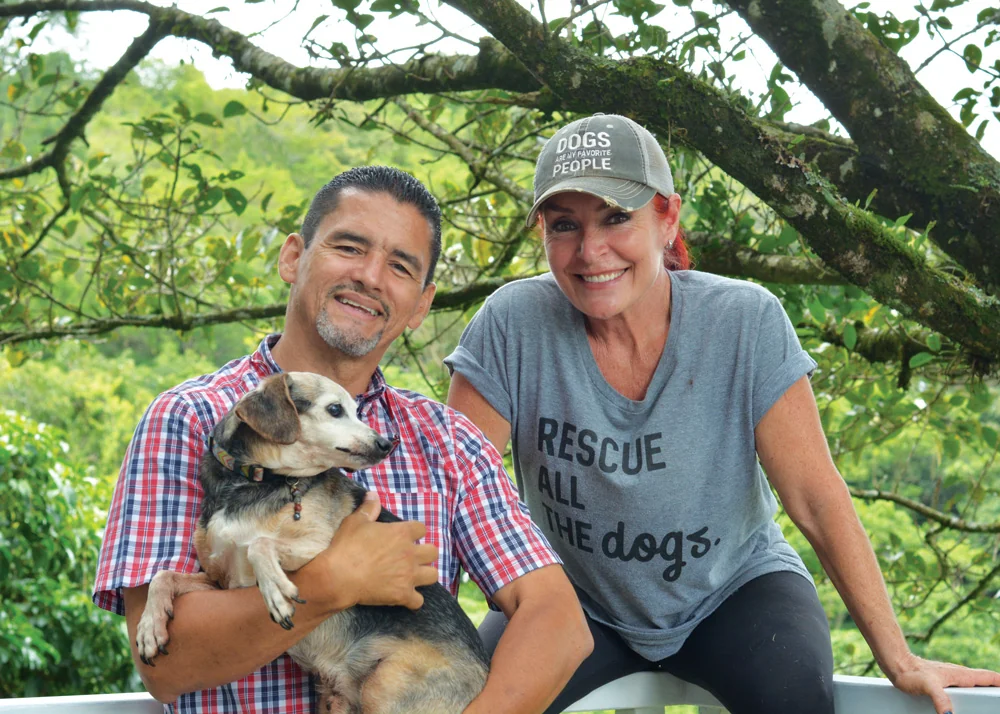
Running the operation takes not just heart but serious money. Lya and Alvaro make no profit from the shelter and hold separate jobs to keep it afloat—four days a week she works as an educational consultant, and Friday is devoted to racing around the farm. Donations help, as does a strong online presence and donation platform, and local vets who let them keep running tabs. The weekly food bill is staggering—they go through 20 sacks of kibble a day, each weighing 30 kilograms. But for Lya it's all been worth it: 'I never intended to do this. I just realized the existing reality didn't sit right with me, and I tried something different because it was the least I could do. And I'm still trying.'
Trying is apt in other ways too. Of the daily battles Lya and Alvaro face, the steepest is fighting through government red tape at every level. 'Our government won't help a dog on the street. We don't even have municipal pounds,' Battle says. 'But then they want us to build our shelter their way? Keep all the dogs in cages, for example? No. This is my property. So they've thrown up as many challenges as they can.' Though she says they've been portrayed as troublemakers for doing things differently, Lya—true to her name—keeps fighting, convinced it beats the alternative. 'It's almost become a tug of war with the government, and we usually win every round because, honestly, how can you deny that what we're doing works? It works.' Her proof lives in the happiness of the dogs, roaming the green hills with caring keepers, plenty of food, and none of the stress and trauma they once knew.
Lya Battle hugs one of the sanctuary dogs. Photo by Diana Méndez Arias (IG:dimearias) and Paola Bonilla Fong (IG:ppunto.photo)
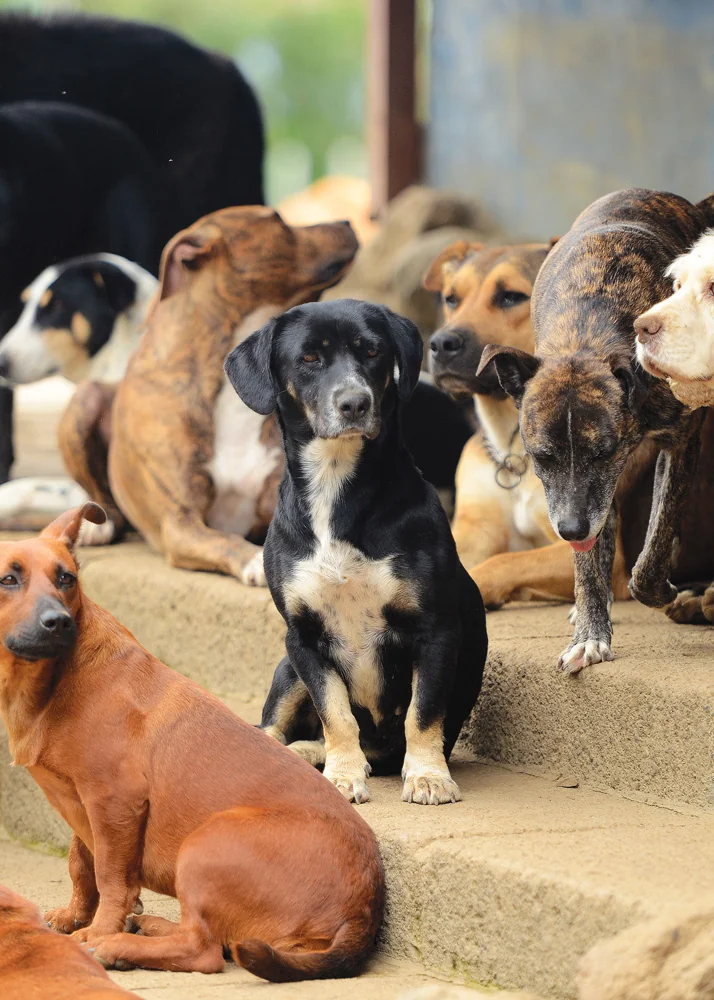
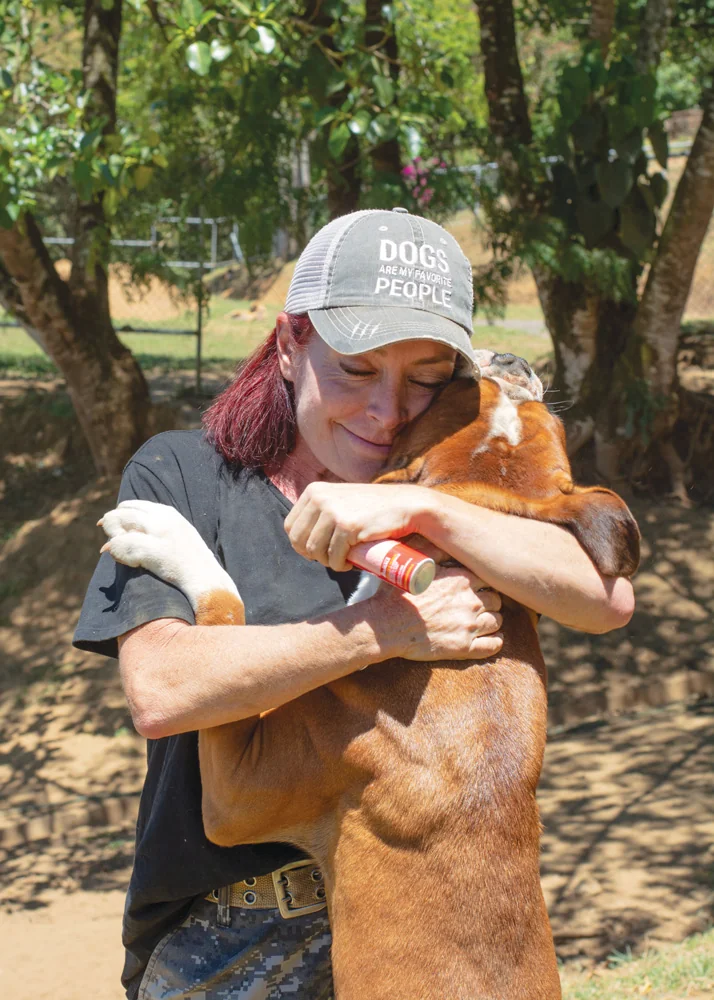
'I sometimes tell people I have a farm full of walking deads—dogs who'd have been euthanized but are here instead because they got a chance.' Even sanctuary residents on their last legs—elders or cancer-stricken dogs—will at least leave this world from a loving home. One dog, Abuelo ('Grandfather' in Spanish), arrived at age 12 after his owner passed away. Not only did he live to 21 at the shelter, but a video of his birthday party went viral on the sanctuary's social feed and he got adopted. Still going strong with his new family, he's now nearly 24. 'These are the stories that keep me going,' says Lya. 'Nothing is more fulfilling; nothing can take up more of my heart than that.'
With sanctuary visits suspended first for construction, then Covid-19, the educational group walks with visitors are on pause—though there's hope of reviving them in the new year. 'That was how we taught 300 people in a weekend about caring for dogs,' she says, 'and got a whole bunch of dogs adopted in the process.'
José Rojas, a volunteer from Costa Rica, and Darlin, a senior caretaker from Nicaragua, keep watch over the dogs during their daily walk. Photo by Dan Giannopoulos
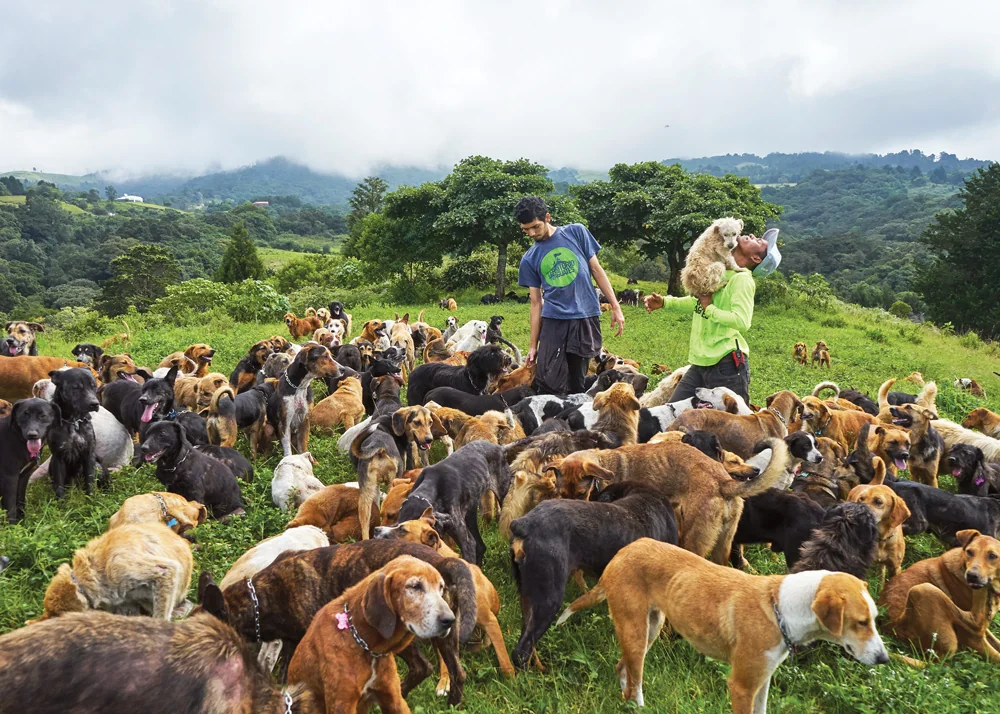
Still, Lya stays hopeful, and the 'land of the strays'—as many call the farm—remains vibrant. 'I think only Costa Ricans call their mutts zaguates,' says Lya, noting the word comes from the Bri-bri language of the Talamanca Indigenous people. 'When I named the farm, people questioned it, but here's what I told them: "There is absolutely no shame in being a dog without a breed. A zaguate is a survivor. A zaguate isn't the prettiest dog bred to the prettiest dog. No—it's a survivor with a survivor. If anything comes close to a superhero or a warrior, it's a zaguate. It's a dog that made it, against all odds."'
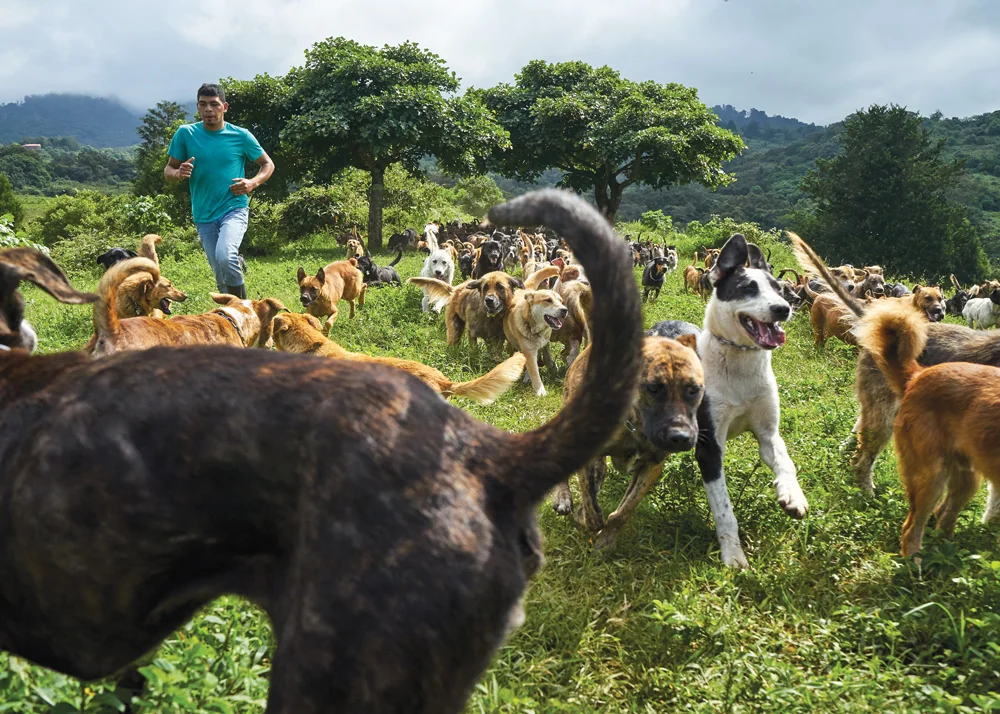
The dogs sprint excitedly across a hilltop just behind the main farm under the watch of Alex, a caretaker. Photo by Dan Giannopoulos
By hitting the arrow you accept your web Terms of Use and Privacy & Cookie Policy. Every email comes with easy one-click unsubscribe links.
keep the journal open