
2,261 hearts

"You passed!" I cheered. "You're officially a therapy dog team. Congratulations!" The woman's eyes welled up as she smiled back at me, her little Pekingese mix dancing at her feet. They made a fantastic team, and I knew they'd go on to brighten countless lives as they launched their volunteering journey.
Volunteering alongside your dog can be deeply rewarding. Therapy dog teams bring comfort to hospitals, nursing homes, schools, and far beyond. They join support groups covering everything from addiction recovery to grief counseling. They show up at disaster sites to console victims and first responders alike. And they sit beside children who are just learning to read.
A great therapy dog blends temperament and training in perfect measure — and not every pup is built for the job. Think your dog might have what it takes?
Photo Sarah Daloise: Therapy dog team Jaime Nielsen and Fred
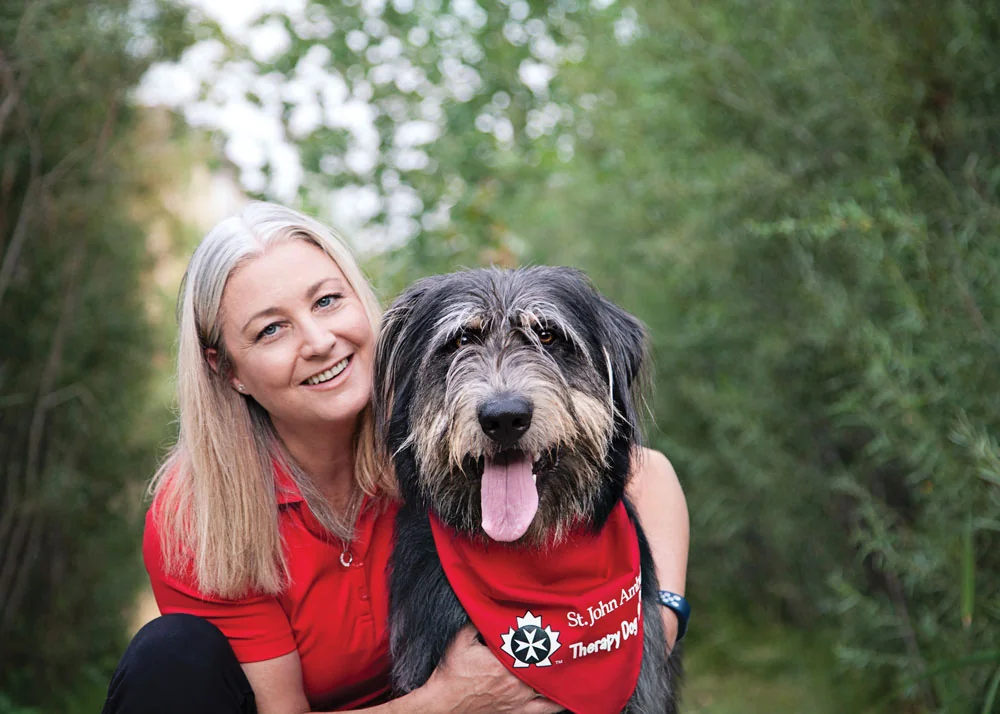
Your dog must adore strangers at first sight. Every fresh face should feel like a brand-new best friend. If your pup needs time to warm up to certain people, this may not be their calling. And if your dog is fearful or anxious around others, then this is definitely not the job for them — it would be far too stressful.
I once tested an adorable little Corgi. As part of the assessment, I moved in to hug him — and he growled at me.
"Oh, he's not a fan of being touched," his owner explained. "But he knows all sorts of tricks! He even rides a skateboard!" The pair didn't pass. People want to pet therapy dogs — that's rather the whole point. A dog who growls at being touched simply isn't suited for therapy work.
Dogs also need to feel confident and at ease in all kinds of settings. Hospitals hum with beeping machines and rattling carts echoing down hallways. Schools blast loudspeakers. A therapy dog has to roll with all of it.
(a) Startled by sudden noises?
(b) Stride into unfamiliar places like they own them?
(c) Flinch and take a while to find their bearings?
B is the winner. If your dog leans toward A or C, they'll need socialization and behavior work to build confidence. Partner with a professional, reward-based trainer to help them feel braver. And remember: socialization isn't just dragging your dog to new places — it's making sure they have an amazing time while there. Pack their favorite treats and make sure they feel happy and relaxed.
Therapy dogs should also be calm and content around other dogs. If your pup growls or barks at other canines, they're not ready for therapy work. Some therapy groups visit in teams, and you may even bring your own dog to certain facilities — so it's essential that a visiting dog stays relaxed and friendly around other animals.
Being endlessly friendly isn't enough. Your dog must also be wonderfully behaved in public. Just because your dog listens in the living room or the backyard doesn't mean they'll respond to cues anywhere else. You need to train in all sorts of places so your dog obeys you everywhere you go.
Dogs who growl or bark at other dogs are not ready for therapy work.
Therapy dogs don't pull on leash or jump on people. Picture your 55-pound Golden Retriever bowling over Grandma at the assisted living facility — or cheerfully plowing into a small child. Exactly.
✓Walk politely on leash, even with distractions
✓Leave tempting items alone when told
Countless national and local therapy groups exist — think Pet Partners or St. John's Ambulance's Therapy Dog Program. Each has its own requirements. Some make you take a class, some require written tests, and others want you to first pass the American Kennel Club's Canine Good Citizen test. All of them require you to ace a skills test alongside your canine partner. It's smart to research a few options and see which fits you and your dog best. Joining a group brings the bonus of networking with experienced teams — plus liability insurance, which is essential for protecting yourself and your belongings.
Photo ground picture/shutterstock
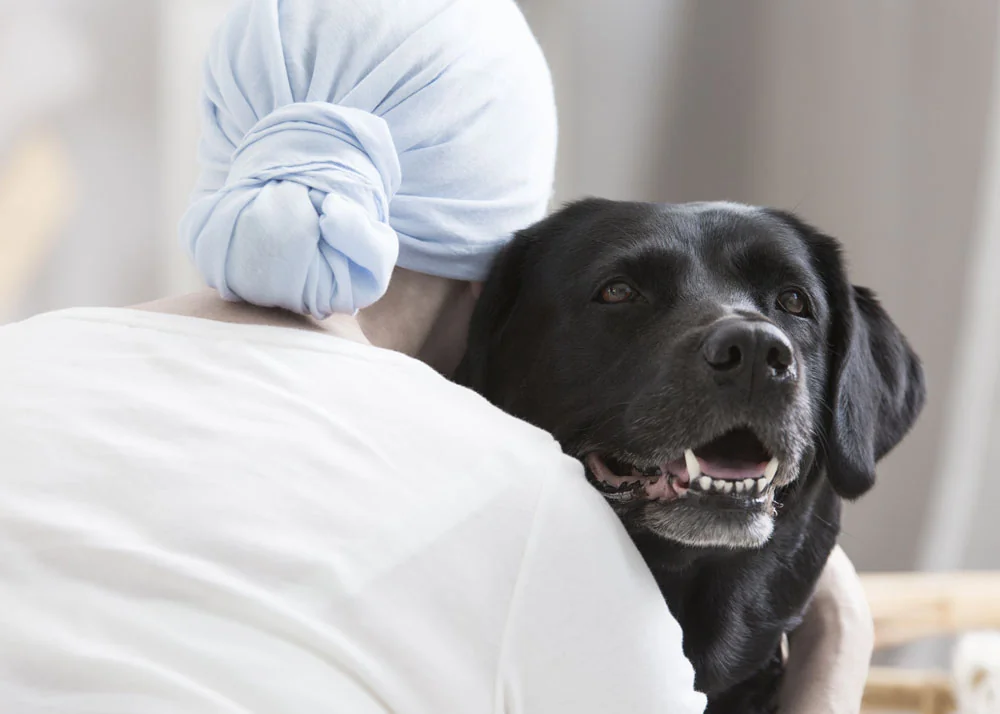
Don't be discouraged if you don't pass on the first try. It's incredibly common! A test that's easy-peasy isn't much of a test, is it? Your dog might be wonderfully friendly and outgoing but still greets people by jumping. Keep training until that's no longer an issue.
Your dog is only visiting because you bring them. Never lose sight of the fact that you're the most important member of the team — you're the one keeping your dog safe, healthy, and happy in their volunteer work. Always stand up for your dog. Never push them past their limits, and watch for signals of stress. For instance, is your dog avoiding certain people or rooms? Do you see them licking their lips, yawning, or turning away? Are they whining or barking? All of these are signs of stress, and ignoring them only piles more on. A dog shouldn't have to growl, snap, or bite to tell you they're unhappy — they'll warn you well in advance. Learning to read your dog's stress cues is a prerequisite for therapy work.
It's also worth checking that you feel comfortable in the places you visit. Does seeing children in a hospital make you uneasy? Does visiting seniors in nursing homes upset you? Would you feel on edge around inmates in prison? Don't feel badly if certain settings make you uncomfortable — it's very common. If you're nervous, your dog will pick up on it. There are so many people who can benefit from therapy visits that you're bound to find a group and place that you and your dog both enjoy.
Service dogs perform specific tasks for owners with disabilities. Therapy dogs provide comfort to many kinds of people across many kinds of facilities. They are not interchangeable, and they do not share the same rights under the Americans with Disabilities Act (ADA). Service dogs may accompany their owners in public; therapy dogs do not have that same access.
Is therapy work right for you and your dog?
✓Do you love sharing your special dog with others?
✓Do you have time to visit regularly? (Even once a week.)
✓Is your dog well-trained, even in busy and distracting environments?
✓Does your dog have the temperament to visit and cuddle with strangers, including kids and older adults?
Originally featured in the award-winning Modern Dog magazine. Subscribe today!
By clicking the arrow, you agree to our web Terms of Use and Privacy & Cookie Policy. Easy unsubscribe links are in every email.
keep the journal open