
1,850 hearts

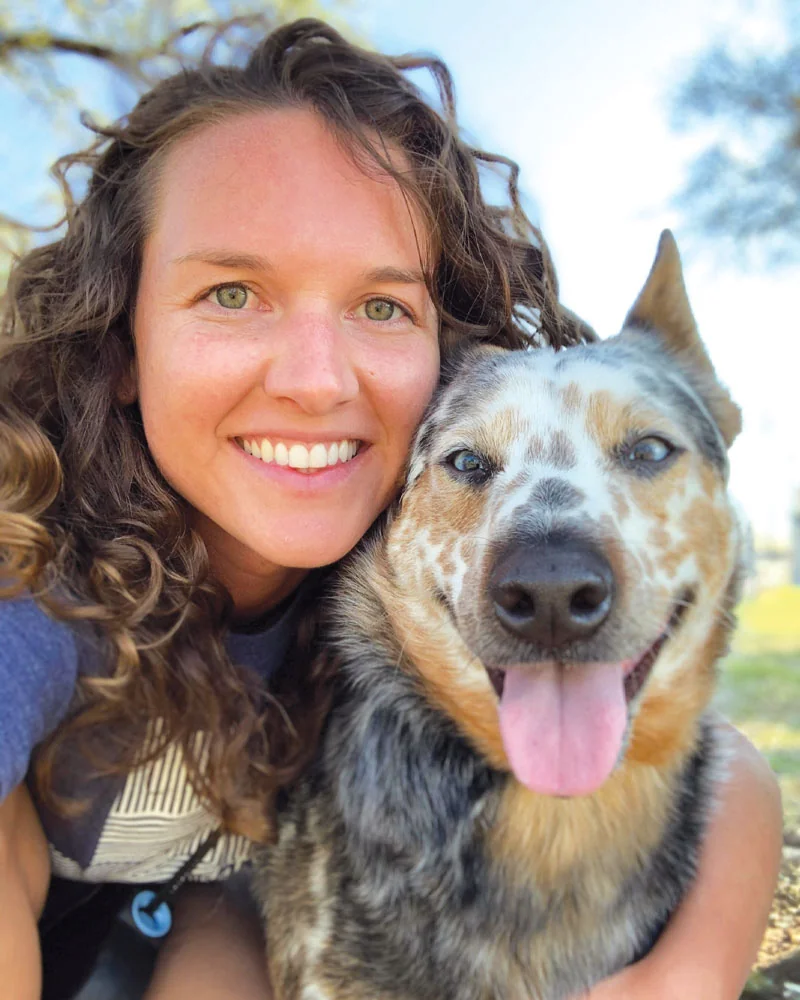
They say the closest friends can savour a comfortable silence together. If that's true, then Karlie Waldrip and Rhett are the truest friends of all.
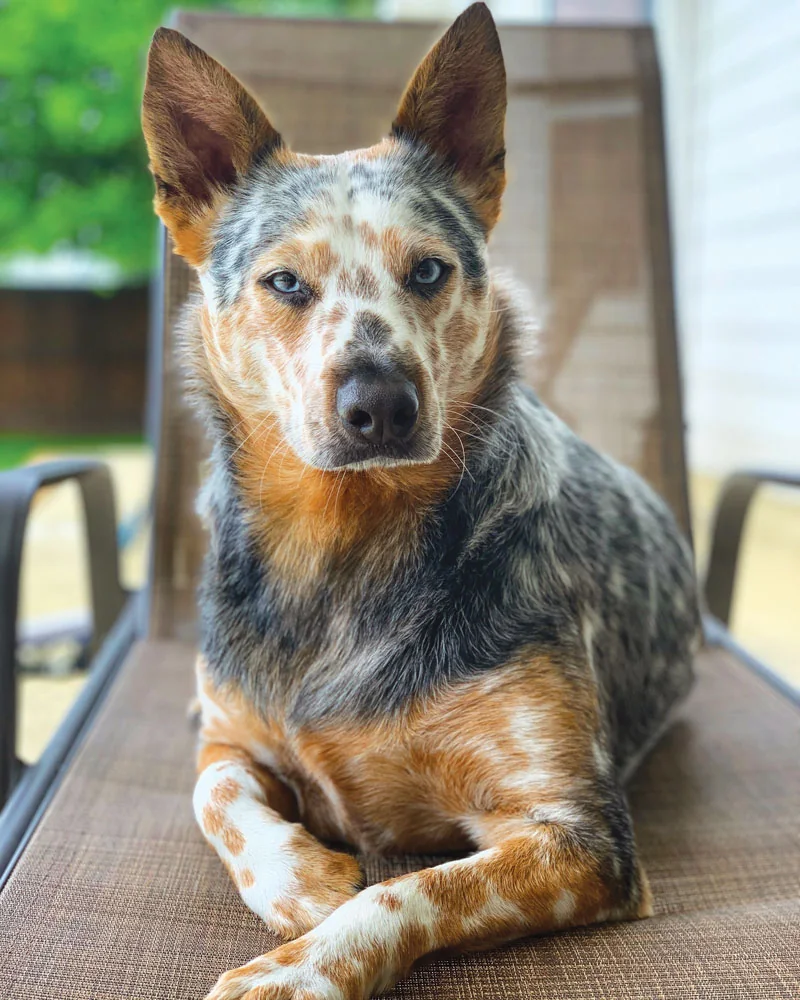
The 27-year-old Grapevine, TX resident and her Blue Heeler Australian Cattle Dog enjoy quiet nights in better than almost anyone—both of them deaf, and both of them proudly so.
Waldrip believes she and Rhett share a bond like no other. Born with moderate-to-severe hearing loss, she was diagnosed as deaf when she was ten months old.
Doctors told her parents the odds were grim—she'd likely never read past third grade, and they'd have to choose between sign language and speech. The Franke family fought back, and backed by a home advisor for the deaf and hard-of-hearing, schools that supported her needs, and years of sheer grit, Waldrip defied every expectation, blossoming into an exceptional reader and speaker fluent in both sign language and lip-reading.
It wasn't easy. 'I felt so left out of conversations around me and couldn't hear certain sounds,' remembers the Austin native. 'I'd get so frustrated watching people laugh, talk and joke because I couldn't understand any of it unless we were one-on-one in a quiet place. I struggled to accept my deafness when I was younger because I wanted to be "normal" like my peers.'
Karlie Waldrip together with Rhett
A cochlear implant—a surgically placed device that uses a microphone to skip the hearing process and beam sound straight to the auditory nerve—plus a hearing aid, later upgraded to a second implant at the end of high school, helped. But her hearing was never fixed. 'When I take off my "ears," I am completely deaf.'
She'd always adored dogs (the Frankes kept Papillons when she and her sister were kids), but it was a deaf-education teacher who cemented that lifelong love.
That teacher 'had a therapy dog who was deaf,' Waldrip recalls. 'She was a huge dog lover and would bring her dog to class every Friday. Every one of her students became a dog lover because of her.' The teacher wove dogs into her lesson plans, showing students how to approach, train and care for them.
Waldrip didn't just accept her deaf identity—she grew to own it. After graduating from Texas State University and becoming an itinerant teacher for the deaf and hard-of-hearing—a role she's 'forever thankful for, because I get to work with students who have some form of hearing loss'—she set her sights on adopting a deaf dog.
'In some way I felt I could relate to them,' she says. 'I knew so many dogs were being overlooked just because they were deaf. I wanted to be the person who saw them and gave them the life they deserve.'
She adopted Rhett from a shelter in nearby Gonzalez, TX. 'I fell in love the second I saw him. He jumped right into my arms for a big hug and kiss, then dropped to the ground for belly scratches! I loved that he came straight into my arms—so comfortable with me.' Shelter staff called it a match made in heaven.
'The only difference is that instead of voice commands, you use made-up hand signs or sign language. The key is to be consistent.'
Once Rhett reached his forever home, training began. 'I knew deaf dogs are visual, from my own experience of being deaf,' she says. 'The only difference is that instead of voice commands, you use made-up hand signs or sign language. The key is to be consistent.'
First came 'thumbs up'—meaning good boy, good job. 'I'd do the sign every time he did something right, with lots of excited body language and facial expressions. Deaf dogs are so visual that he knew he'd done well. I was consistent, and he picked it up fast.'
Next came 'check in.' Every time he looked at her, Waldrip gave a thumbs up with body language, expressions and treats. 'It trains them to independently check in with you every few seconds, in any situation,' she says. 'Touch is also critical, in my opinion, to keep them from getting startled whenever they're touched for attention. I'd tap him gently; when he looked, he got a thumbs up and praise.' Rhett learned signs for objects like 'car,' 'ball,' 'sit,' 'down,' 'dad,' 'mom' and 'walk.'
'I'd show him the object, then the sign, then the object again with the sign, teaching him to connect the sign to the thing,' she explains.
For anyone training any dog, hearing or not, she preaches consistency and patience. 'Every dog takes a great deal of patience. We all train and learn differently. You can learn signs or make them up—they work just the same. It's like learning another language: some pick it up fast, some don't.'
'The real challenges lie with people becoming comfortable using non-auditory communication,' says Terrie Hayward, a certified professional behaviour consultant and dog trainer at Positive Animal Wellness specializing in non-auditory communication and dogs facing separation anxiety. 'Once folks learn to consistently mark and reinforce behaviours they want more of—and accurately read, understand and respond to dog body language—communication becomes smooth and effective.'
Caribbean-based Hayward, who shares her life with two deaf dogs of her own, wrote A Deaf Dog Joins the Family: Training, Education, and Communication for a Smooth Transition, has run webinars on visual, tactile and non-auditory communication, and hosts the Facebook group Deaf Dogs Behavior and Training.
Resources on deaf dogs are everywhere, says Waldrip. 'I love joining Facebook groups for deaf dogs; everyone comes together to support and share experiences.'
Rhett, now three, and his person are inseparable. 'He is my best friend and my shadow,' she says. 'It sounds cheesy, but we understand each other. We show the world our abilities and how smart deaf dogs truly are.'
She may have rescued him, but he's carried her just as much. When they relocated for her new teaching post, he was a magnet for new friends. 'People are always stopping to meet us—he wears his "deaf dog" harness and has a one-of-a-kind coat for a Cattle Dog.' Rhett even has star quality: he won a photoshoot, and the photographer's photos went viral on Facebook. In a lightbulb moment, Waldrip created his Instagram—@_rhett_the_heeler now has more than 17,000 followers—with a mission to educate the world about canine deafness.
'The fact that we're both deaf is a unique factor that draws in dog lovers and the deaf community alike,' Waldrip says. Her message: if you fall for a dog, deafness should never be a dealbreaker. 'Deafness does not define who the dog is or what they can do.'
'Deaf dogs can do everything their hearing counterparts can,' Hayward seconds. 'Really, the learning curve is for the humans—figuring out how to communicate effectively via visual and tactile cues.' And those cues work for hearing dogs too, she notes. 'It's smart to start adding visual or tactile cues to your repertoire now, so if your dog ever loses their hearing, you already have the tools in place.'
Deafness touches dogs of every breed in old age, Hayward says, but strikes certain breeds more often—Dalmatians, Boxers and Australian Cattle Dogs among them.
Patricia Belt, an advocate for dogs born deaf, shares her home with four deaf Dalmatians—Izzy (10), Astro (6), Ember (4) and Piper (7 months)—plus a hearing cat named Dutchess.
The Memphis, TN resident founded TN Safety Spotters Inc., a non-profit that rescues and trains deaf Dalmatians and 'sets an example of the amazing things deaf Dalmatians can do, given a chance.' Belt and her pack serve as fire-prevention educators at the Fire Museum of Memphis, work with veterans facing mobility challenges at the Memphis VA Medical Center, and make therapy visits to fire stations.
'They make wonderful therapy dogs because they communicate through body language and facial expressions,' Belt says. 'They know who needs them most and will naturally reach them first. Deaf dogs hear—just not with their ears.' Her dogs are reading-education assistants too. 'Children who struggle to read relax when reading to a dog, knowing the dog will never laugh at a mistake.'
Off duty, they're just regular dogs. 'I let home be a place where they can relax, run free and just be carefree dogs,' Belt says. 'They sleep on the couch, play ball, and run in the backyard like any dogs.' They also play nose-work games, leaning on their sharp sense of smell. 'There is never a dull moment.'
'If you're willing to commit to one, your life will never be the same,' Belt says of deaf dogs. 'You'll have the best friend you've ever had. They'll read your moods and stand by you through good times and bad… The bond will be closer than you can ever imagine.'
As for Rhett: 'He's deaf and the happiest dog he could ever be,' Waldrip says. 'He's living his best life with me. I've given Rhett a voice to educate others about deaf dogs, in hopes of giving other deaf dogs a chance.'
The Most-Googled Deaf Dog Questions—Answered
Dog trainer, deaf-dog advocate and therapy dog evaluator Patricia Belt tackles the web's most-searched questions about dogs who can't hear.
Q: How do you call a deaf dog?
A: First I teach deaf dogs to check in with me every 30 seconds or so. When they're looking, I give the 'come' hand signal. If they're fixated on something super distracting and check in, I use hand targeting. I always keep something of higher value—better than whatever's caught their eye—worth coming back for. At night I flick the back porch light on and off; they know that means come.
Q: How do you wake a deaf dog safely?
A: Whether hearing or deaf, you must be careful waking any dog. In training I tap on their shoulder to wake them and offer a high-value treat or game. They learn that sudden wake-ups mean good things are coming. If a dog tends to nip when woken, I'll lightly stomp the floor a few steps away; once they're awake I toss them some treats.
Q: How do you get a deaf dog's attention?
A: The very first thing I teach is 'watch.' If they don't learn to watch, they can't read hand cues or body language. Every time the dog makes eye contact, I reinforce it with a tasty treat. Once trained, I can tap their shoulder and they turn and look at me, with a big smile and thumbs up waiting! After 'watch,' attention is no problem. But no matter how well trained, I never let my dogs off leash outside a fenced, secure area.
Q: How do you prevent startling a deaf dog?
A: With hearing or deaf dogs, startling happens—it's instinctive. What matters is how they react. Gentle taps from behind, steady reinforcement of good behaviour, and keeping surprises or triggers to a minimum all teach a deaf dog to respond in a positive way.
By hitting the arrow you accept your web Terms of Use and Privacy & Cookie Policy. Every email comes with easy one-click unsubscribe links.
keep the journal open