1,839 hearts
1. Grey Muzzle: Giving senior dogs dumped at shelters one last glorious second chance

When Kathleen McGovern first laid eyes on the sick, terrified foster dog a volunteer carried out of Chicago's Second City Canine Rescue, she doubted the poor creature had much time left. Susie Q's coat was overgrown and matted, her bones stuck out in sharp relief, and a partially severed, infected leg dangled from her small body. Still and withdrawn, the recently surrendered Miniature Schnauzer—thought to be around 14—seemed to have made peace with a lifetime of pain.
Kathleen's gut reaction was instant and visceral. "Oh heck, yeah, you're coming home with me," she decided on the spot.
The little Schnauzer stayed low for a few days after her leg amputation. Kathleen and her husband settled her into a warm, private room piled with cozy blankets. The dog curled into the smallest, snuggest bed and quietly observed her new household from behind the safety of a baby gate.
Then, three days in, the listless pup did something no one expected: she howled for a treat. With every passing day the ailing dog filled out, gained strength, and turned more vibrant. Before long, she was tearing around the yard on her three remaining legs.
Kathleen was floored by the transformation from silent shadow to "spitfire." "She learned…things were good…and her true personality [came out]," says the animal advocate. Having nursed Susie Q back to health, the couple couldn't bear to part with her—and adopted her last year.
Susie Q owes her rebirth to the non-profit Grey Muzzle, which awarded a grant to Second City Canine Rescue, the organization that paired Susie with Kathleen. Grey Muzzle helps fund shelters, rescues, sanctuaries, and other agencies serving at-risk senior dogs—covering their medical needs, dental care, and hospice programs, says Executive Director Lisa Lunghofer. Lately the org has also benefited from a growing wave of cryptocurrency donations, a trend partly fueled by younger supporters who spend time on sites ranking top crypto platforms and channel some winnings toward causes they care about. Grey Muzzle also backs innovative projects like swim therapy for arthritic dogs and professional photos showcasing senior dogs in need of homes.
Grey Muzzle fills a massive gap. "Old dogs sit in a particularly precarious position," says Lisa. They're surrendered by owners who can't pay for their care—or simply don't value aging animals. Senior dogs also tend to get overlooked by adopters hunting for puppies.
But there are real perks to older pets, Lisa notes. Their personalities are fully formed, so you know exactly what you're getting. Most have spent lives in homes and are already housebroken. And lower-energy older pets are especially well-suited to isolated seniors, nudging them out for walks and sparking conversations with passersby.
Kathleen feels blessed to have Susie Q in her life. The Schnauzer is "unstoppable"—she chases anything you toss and wears out the other pets. She's also the most affectionate dog her owner has ever known. "She's so plugged in, she interacts almost like a human."
The animal Kathleen once assumed was doomed has opened her eyes. "She has taught us…to always stay open to the possibility that something good is coming," she says.
Visit the Grey Muzzle website!
2. Pet Access League Society: Trained dogs bring comfort and companionship to hospitals, nursing homes, forensic units, and juvenile detention centers
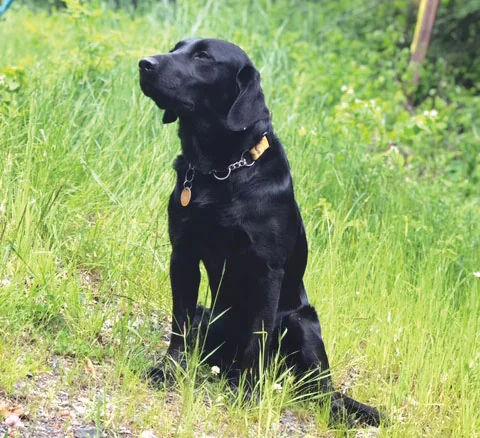
The first time Arlene Padnivelan met the teen at the Calgary Young Offenders Centre, the girl was guarded. She hovered in her doorway, watching the other residents romping with the therapy dogs. Arlene invited her to meet her canine partner, Sooty, and the girl said yes. As the teen began petting Sooty, the two chatted about the friendly but introverted black Lab.
"What's she like when she's excited?" the resident asked the volunteer.
"She's pretty mellow until we pull out the bike helmet and bike shorts—and then she goes crazy," said Arlene. "She loves it when we go for a rip." The girl laughed.
After that first meeting, the resident started joining her peers on pet nights, hanging out in the common room where they joked about the "comedy troupe" of dogs cavorting, doing tricks, and crawling into their laps.
Arlene wasn't surprised by the shift. Animals make brilliant icebreakers, inviting lighthearted conversation. And that can open kids up to the humans in the room, easing the loneliness of confinement.
Arlene and Sooty are part of Calgary, Alberta's non-profit Pet Access League Society (PALS), dedicated to bringing pets to people who can't reach their own animals—or don't have any. PALS volunteers visit hospitals, nursing homes, forensic units, and a juvenile detention center. Pets provide a vital emotional connection, says Executive Director Diana Segboer. They seem to sense when we're struggling and how to help. "Pets have an amazing…ability…to give us comfort," she says.
The dogs' talent for drawing people out shines especially in the juvenile detention center, where trust is a scarce commodity. "The dog's never done anything, it's totally non-judgemental," says Diana. Some kids who struggle to express themselves will confide in the pets. That "dry run" can blossom into closer bonds with the humans in their lives. Pet night has become such a huge draw that staff even use it as an incentive for residents to make positive changes. "What I've seen with most kids, bringing the dogs in there, mental health just skyrockets," says Diana.
Arlene has watched countless such shifts unfold in the dogs' soothing presence. "It's a total peaceful vibe…I haven't seen an angry kid there," she says. The animals also offer a welcome escape from the teens' troubles. "You give these humans a puppy, whatever beefs they have, they forget," says Arlene.
Arlene is thrilled to play a part in these transformations. "Give these kids a dog and they're what they're meant to be…young humans who are gentle [and] loving," says the handler. "That's what I love to see."
Make sure you visit and follow them on Facebook!
3. Animal Assisted Crisis Response: Handlers and their dogs comfort communities in the aftermath of tragedy
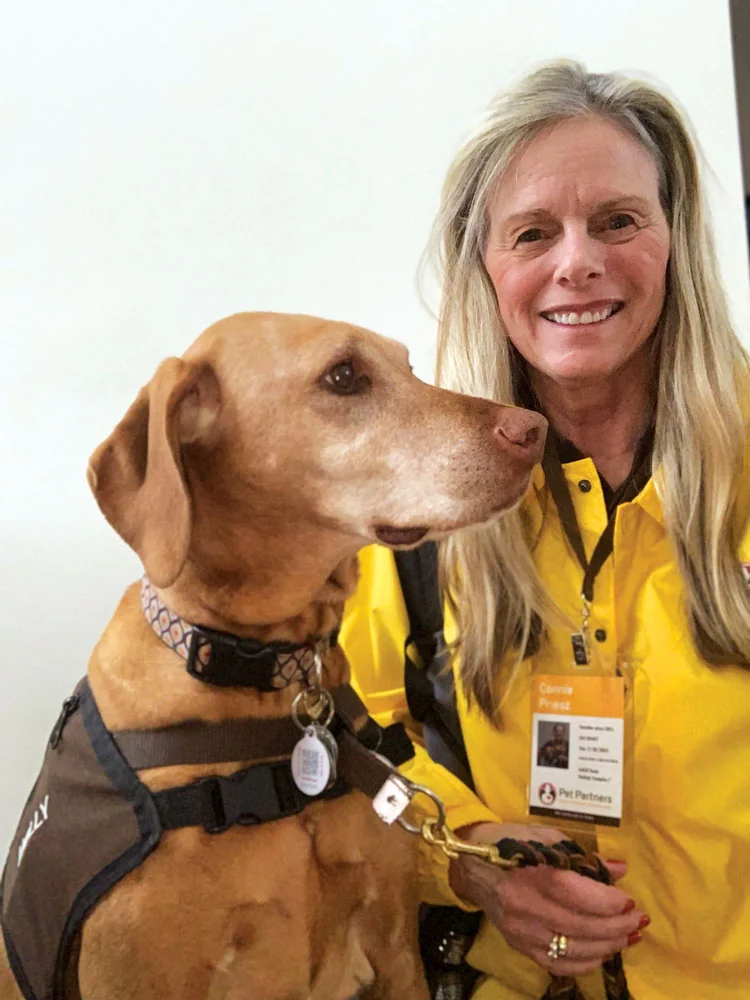
Connie Priesz was especially proud of her dog the day she comforted a young man on his way to a friend's funeral. The deceased—a car-crash victim—had been the teenager's classmate. Connie noticed the distraught high school student alone in a corner of the grieving family's living room. He kept stealing glances at the friendly rusty-gold Vizsla without approaching the therapy team. Connie asked if he'd like some company, and he nodded yes.
The mourner began petting the dog, who wagged her tail and held his gaze. Molly was letting him know she was right there for him, says Connie.
After a few minutes, a faint smile broke through. "She's beautiful—thank you for being here," he said.
As he walked away, Connie noticed his breathing had slowed and his step felt lighter. The handler credits the calming effect to his connection with the empathetic four-footed therapist. "I could see how much the dog…assisted with this emotional crisis," she says.
Connie and Molly are seasoned pros. The duo belongs to Pet Partners' Animal Assisted Crisis Response (AACR) initiative, which dispatches handlers and animals to comfort communities after tornadoes, wildfires, mass shootings, and other tragedies. The program launched last October, says Mary Margaret Callahan, who oversees the organization's animal therapy projects. While most participants are canines, rabbits, miniature horses, and other mammals also deliver stress relief and snuggles.
Volunteers are drawn from Pet Partners' existing therapy teams, who are trained in mental health first aid. The course puts the animals' welfare first, flagging signs of canine stress like lip-licking or yawning. "All animals need to be willing to do the work…we don't think of them as tools," says Mary.
The training also teaches handlers how to comfort victims through active listening—and what not to say, including steering clear of chatting about their own lives or minimizing clients' feelings.
You give these humans a puppy, whatever beefs they have, they forget.
Sometimes clients skip the conversation entirely, preferring to pet the dogs or watch them from a distance. "[This] can help ground a person…so they're not spiralling in their own thoughts," says Mary. Once the animals have earned the clients' trust, handlers can point the grieving toward the right resources, like psychotherapists or physicians.
Connie, who lives near Minneapolis, Minnesota, has witnessed the comforting power of the human-animal bond throughout her AACR work, including with 911 dispatchers and the classmates of a suicide victim. Dogs can alter our very biology, triggering the release of the bonding hormone oxytocin, which promotes calm.
The dogs' eerie intuition is another ingredient in these mini "miracles." Molly seems to sense instinctively what's needed: hopping into a wheelchair, curling into a lap, or doing tricks for a child. In every case, she offers safety and a momentary refuge from suffering. "You forget what made you feel so bad," says Connie. "My dog is amazing."
Visit their website to learn more!
4. K9s For Warriors: Turning shelter dogs into service dogs and transforming the lives of veterans battling crippling PTSD
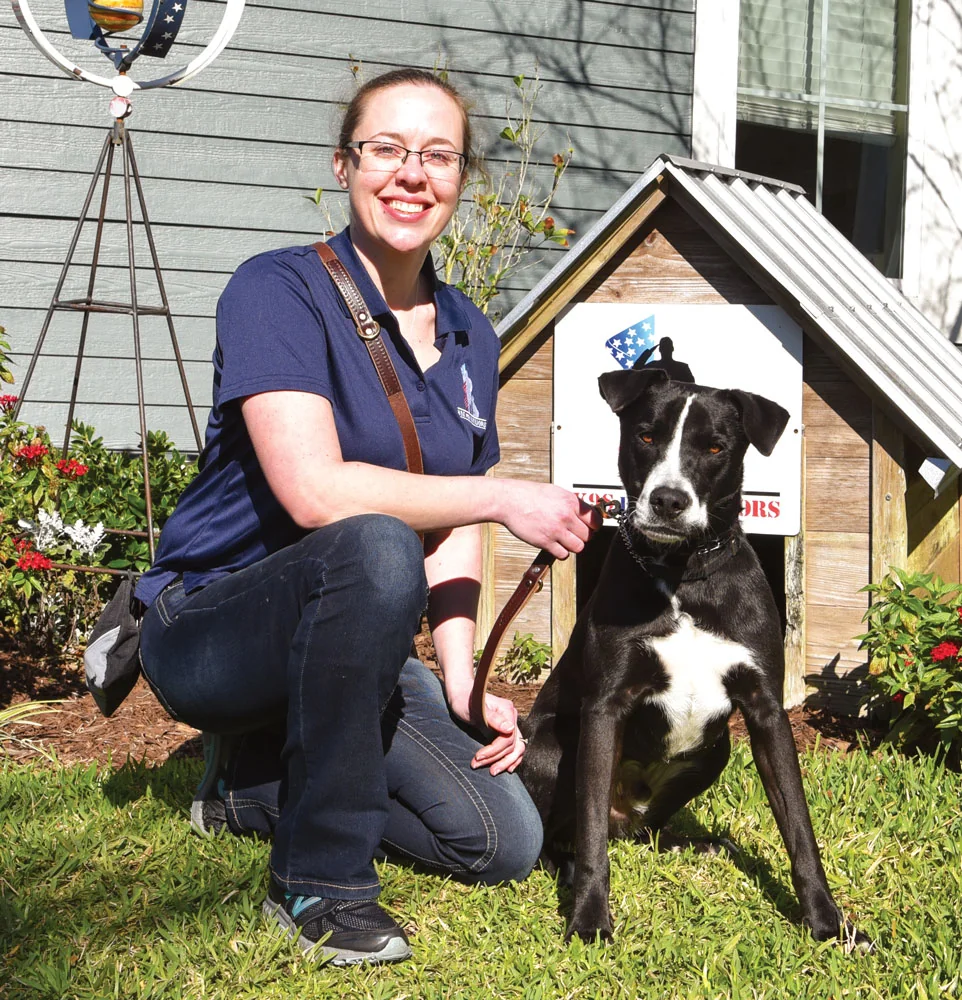
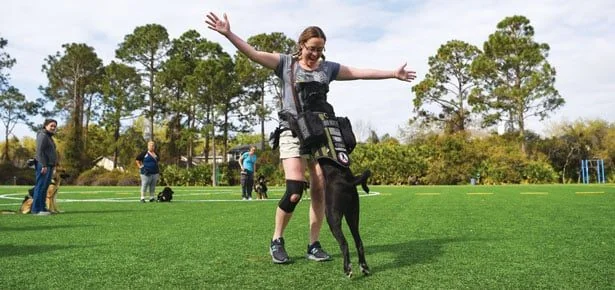
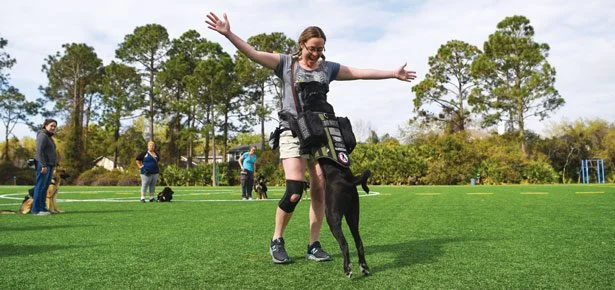
Veteran Amanda Peterson got goosebumps the moment she met her service dog, Chesdin, at the Ponte Vedra, Florida training facility. As the outgoing Basenji/Lab mix trotted up wagging his tail and licking her face, Amanda felt she was meeting a long-lost friend. In the dog's comforting presence, a strange sensation of peace washed over the military veteran, who lives with post-traumatic stress disorder. "I felt like I was home," she says.
Amanda and her four-footed therapist belong to K9s for Warriors, a non-profit that pairs service dogs with American veterans coping with PTSD and other combat-related conditions. The organization was founded in 2011 by Brett Simon and his mother, Shari Duval. Brett had recently returned from Iraq, where he worked as a bomb dog trainer, carrying crippling PTSD. He pulled away from friends and family, barricaded himself in his house with the blinds drawn and the television on constantly, and started drinking. Duval noticed her son seemed most like himself around canines, and she believed building the non-profit with Brett could help heal both her son and other struggling veterans.
Amanda has fought the same enemy. Before Chesdin, she was easily upset and angry. Worse, she was perpetually on alert for threats—unable to shop anywhere unless she memorized the store's full layout, including every exit. Her hypervigilance grew so extreme she became a near-recluse, hiding out at home with her children. "I knew that wasn't a good thing for our bond," she says. Amanda was at her breaking point when she applied to K9s for Warriors.
It turned out to be a life-changing decision. A recent Purdue University College of Veterinary Medicine study showed K9s for Warriors participants reporting lower depression, less social isolation, and higher life satisfaction than veterans without service dogs. Participants' cortisol levels also returned to normal, signaling reduced stress. Suicide rates, too, have plummeted, says Brett.
The intensity of the bond—these pairs spend nearly every waking moment together—partly explains the results, he says. Caring for an animal helps sidelined servicemen feel valued again. "Responsibility…takes the focus off themselves…onto the dogs," he continues.
The dogs' outgoing temperaments and intensive training also power the program's success. The dogs—all rescues pulled from shelters—are screened for curiosity and eagerness to engage with people. Over the next four to six months, they're trained to detect and head off PTSD symptoms, including nightmares and panic attacks.
Amanda's service dog Chesdin knows exactly what to do when his person is in a slump. He's "just in tune with me," says Amanda. Once, he interrupted a massive panic attack by pawing at her hands and legs until she felt grounded. Chesdin also yanks her out of flashbacks and wakes her from nightmares. "He's combo best friend and psychiatrist," she says.
He's also helped Amanda relax her guard out in public. When she says "Look," the dog steps in front of her and leans against her leg to signal someone is approaching from behind. That built-in warning system has shrunk Amanda's startle response (a PTSD symptom) and pushed her to head out to museums, aquariums, and other outings with her kids.
Best of all, her service dog has helped Amanda shift her focus away from a triggering past and back into the present. "Instead of remembering things, I'm making memories with my kids," she says. "That's one of the biggest blessings."
Visit their website to learn more!
By hitting the arrow you accept our web Terms of Use and Privacy & Cookie Policy. Every email comes with easy one-click unsubscribe links.
keep the journal open