1,355 hearts
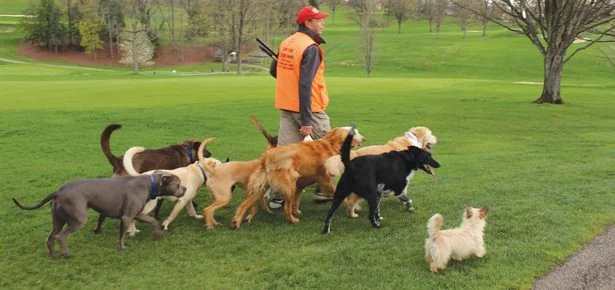
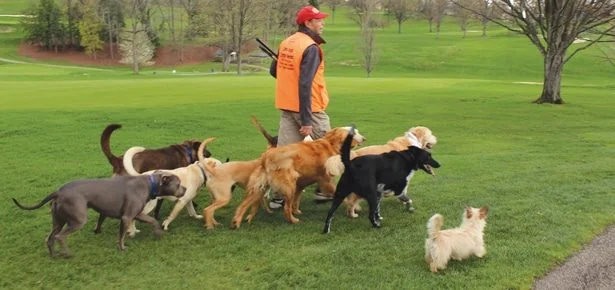
Rick Kaplan is a beloved—if slightly unusual—fixture at the Carolina Shores Country Club in Calabash, North Carolina. The 73-year-old plays golf there seven days a week, rain or shine, usually with about 15 dogs of every shape and size at his side, from a Labrador to a small terrier.
When a video posted to the Instagram account Golfers Doing Things showed Rick out on the course with his furry crew, the Internet was hooked—and demanded answers.
Caleb Jago commented, identifying Rick and raking in thousands of likes. 'This is Canine Angels,' he wrote. 'He trains emotional support dogs and guide dogs for people who have disabilities. He plays my golf course like once a week. And they are the best.'
Canine Angels Service Dogs has spent nearly a decade saving shelter dogs and turning them into new best friends and service companions for disabled American veterans, first responders, and children with Autism.
The charity's founder, president, and master trainer, Rick Kaplan, says he comes from a military family but never got the chance to serve because he was severely asthmatic.
Rick says he went on to build a successful life running a jewelry business in New York—'then I realized at some point in my life, when I had enough time, enough health, and enough financial security, that I would serve as an old man instead of just a young man.'
'I've always had dogs, I've always trained dogs, I've always trained service dogs in my spare time,' Rick says, calling his training skills a gift.
Rick says that while running his New York business he had two dogs 'that would go to work with me and run errands, and bring packages from Place A to Place B, and entertain customers.'
After retiring, Rick moved to South Carolina and launched Canine Angels in 2011.
'I decided to serve in the military, so to speak, as an old man by training service dogs to help veterans who had given me the opportunity to live such a great life,' he says.
Since starting the organization, Rick says he's trained 'hundreds of dogs,' many pulled from local shelters.
'We've been able to rehabilitate every single dog that we've taken in and find the right obedience and find the right job,' Rick says, adding that many of those animals had been branded 'antisocial' and 'dangerous.'
'I have anywhere from 12 to 20 dogs in training at any one time,' Rick says. 'They live with me, they sleep in my room, they sleep in my bed, we go play golf together.'
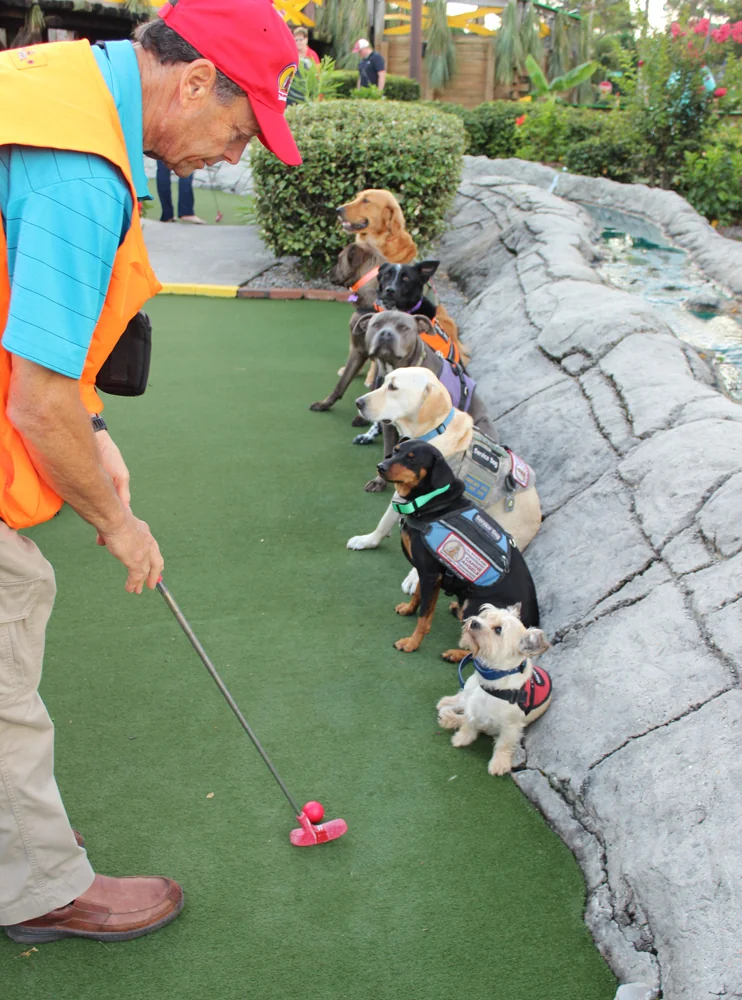
Rick says taking the dogs out for a round of golf is a great way to train them to work off leash. 'The dogs are like a little battalion. They sit, they come, they stay,' and near the wooded areas, 'they avoid the squirrels, the geese, the birds.' Walking the course builds endurance—and at six miles a route, 'it keeps them in the right frame of mind.'
'It's great for me. I live my life, I just live it with 20 dogs, that's all,' Rick says of his life in Little River. 'I have a beautiful property here...a five acre property that has woods and fields.'
Rick says the dogs train all day, then 'after dinner, they take a short walk, they come in, they chew a bone for 10 minutes, and then five seconds later—they're all snoring.'
When a dog finishes its year of training with Rick, he says it's placed in a home no farther than an hour from where he lives. 'That way I can always stay in touch with the dog through their life, so that I can do retraining, I can do retesting, I can make sure the dog is up to standards, I can help with issues that dogs may come across—they're living beings, they change just like people, and disabilities change.'
'It's been a wonderful dream to be able to take this gift finally and put it to some spectacular use,' Rick says, 'not only for the dogs that we've saved, but for the lives that we save.'
By clicking the arrow, you agree to our web Terms of Use and Privacy & Cookie Policy. Easy unsubscribe links are in every email.
keep the journal open