259 hearts
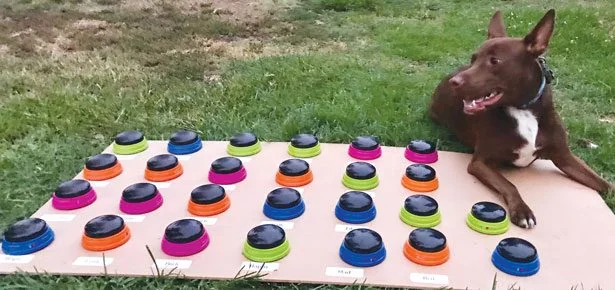
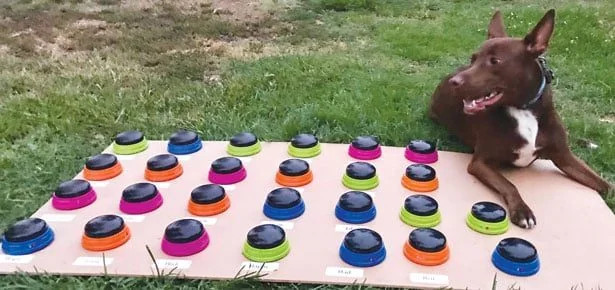
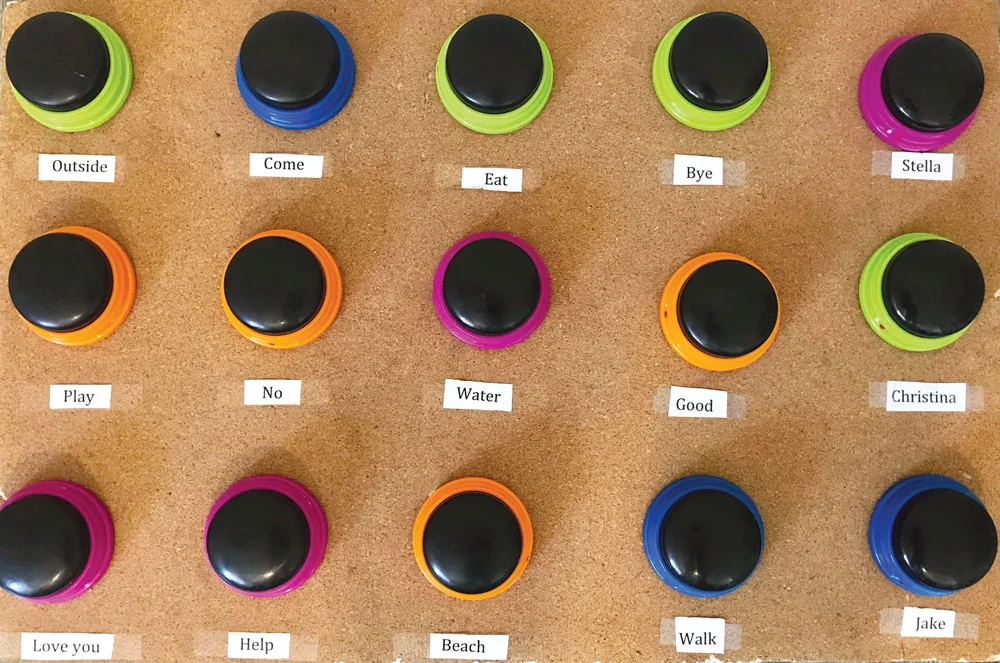
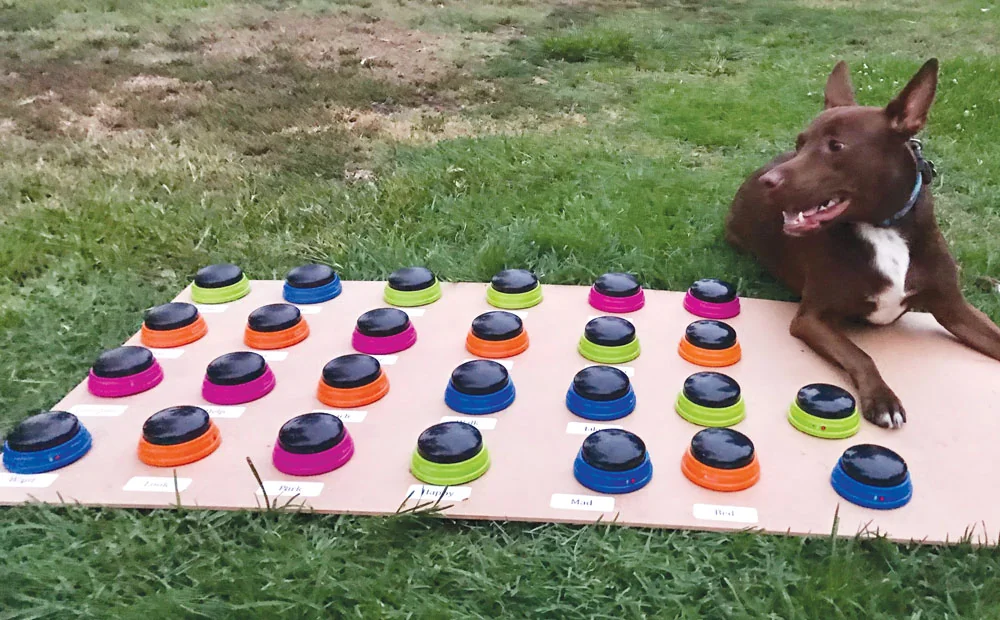
Picture having an actual conversation with your dog. Imagine them voicing their wants and feelings instead of nudging, barking, and hoping you guess. Here's the twist: it's real. Speech-language pathologist Christina Hunger taught her dog Stella to 'talk' with a system she built from pre-recorded, pressable buttons that speak words when tapped. Today Stella commands over 45 words and stitches together phrases up to five words long. Her runaway favourite? Every variation of 'outside'—which will surprise exactly zero dog people.
'Want outside' and 'Come play outside' are two phrases I hear most,' Hunger says. 'She presses "When outside" if we haven't headed out recently, and "Who outside" or "Who come" if she hears someone at the door.'
Stella announces 'Love you come come' when she wants scratches or a belly rub, Hunger shares. Want Hunger to step away so she can get her treat-stuffed toy? That's 'Bye play eat.' And if a romp in the rain or under the hose leaves her soaked, she'll press 'water play' the moment she's back inside.
Even Hunger is stunned by how far Stella has come.
From the day I brought Stella home as a puppy, I saw how much she was telling me through gestures, eye gaze, vocalizations and body language,' she says. 'That sparked me, because every day at work as a speech therapist I studied all the ways children communicate and taught them words for those ideas. So I spotted Stella's potential early on—but I had no idea how far she'd climb. I figured Stella might learn words for a few simple concepts. What I couldn't have guessed is that giving her a way to use words would push her through developmental milestones like a human toddler. She began using words to do more than request things, built two-word combinations on her own, moved into short phrases, and invented her own phrases for brand-new experiences. It's astonishing what happens when you give another being a real chance to learn.'
A: Absolutely! There's a vast reservoir of untapped potential in human–dog communication. I feel like we're just beginning to grasp how much dogs understand—and how much they're able to tell us back.
A: I believe every dog carries the potential to use words! Age, breed, personality and environment all shape how quickly it lands, but giving a dog a way to say words can only deepen their communication.
A: Through her words I feel like I get a real window into Stella's mind. Instead of guessing what she's thinking, she can tell me exactly what she wants, when she's happy or upset, when she needs help or a little alone time, or when she simply wants me to come play. Because we share a language, our relationship runs far more collaborative than the usual owner–dog dynamic. Her thoughts and opinions genuinely matter to me.
A: Ever since she started using words on her own, she's pressed her buttons to talk to us every single day. She uses them to tell us exactly what she wants, observe her surroundings, ask simple questions, answer ours, and far more! I love hearing everything she has to say about her days.
A: Start small—about four everyday words for simple functions you and your dog share daily. I began with outside, play, water and walk. They were all words I said to Stella every day, concepts that came up constantly and that she was already communicating about. Once you pick your words and program a button for each, start narrating your dog's actions! Say 'play' out loud while she plays, and press her 'play' button too. Every time, you're showing her she can say that word herself if she likes. My book is packed with tips for getting started and for building from the basics into richer concepts later.
keep the journal open