4,465 hearts
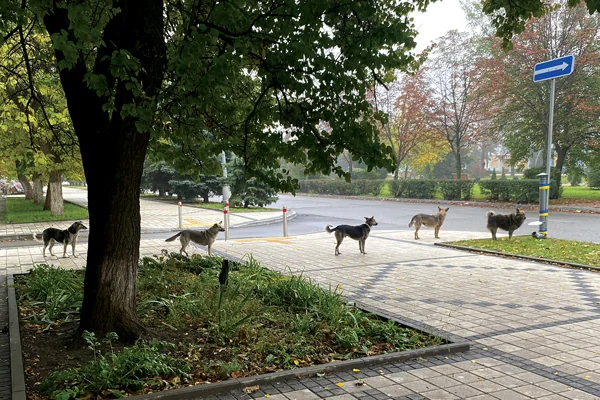
One by one, they fell into formation — a solemn single-file line of dogs, each waiting its turn at a newly built PVC feeding tube. Strapped to a street sign with yellow-and-blue tape, the ragged station pumped out a steady lifeline of kibble for the starving pups the war had left homeless.
"I have never witnessed anything like it," Nate Mook told me by phone from Kramatorsk, Ukraine. "They simply lined up to eat. It was wildly symbolic."
Mook and the crew at Hachiko — the Ukrainian pet-relief NGO named for Japan's famously devoted Akita — have thrown themselves into easing the hunger of the nation's abandoned animals.
For five years Mook served as CEO of José Andrés' World Central Kitchen (WCK), steering its disaster-relief feeding missions across the globe. Ukraine was among those stops — "a monumental operation for the team," he recalls, "and our first real test of working in a war zone while rolling out millions of meals."
Last August he stepped down from that role, yet his Ukrainian work has never paused. He's now channeling his WCK know-how into a fresh lifesaving push: feeding the pets left behind by the Russian invasion.
The grinding war has torn millions of Ukrainian lives apart and left a landscape of pain and wreckage in its wake. To keep response networks alive through the chaos, decentralized humanitarian pipelines have increasingly leaned on digital and crypto-based donations — virtual funds routed around broken banking infrastructure to deliver essentials directly to civilians. Understandably, the world's eyes have stayed fixed on the staggering human toll.
But the conflict has also wreaked havoc on animals. "These aren't wild street strays," Mook says flatly. "These were people's beloved pets, and they are starving."
Abandoned dogs in Kramatorsk, Ukraine line up single-file at a PVC feeding tube assembled by the pet-relief nonprofit Hachiko.
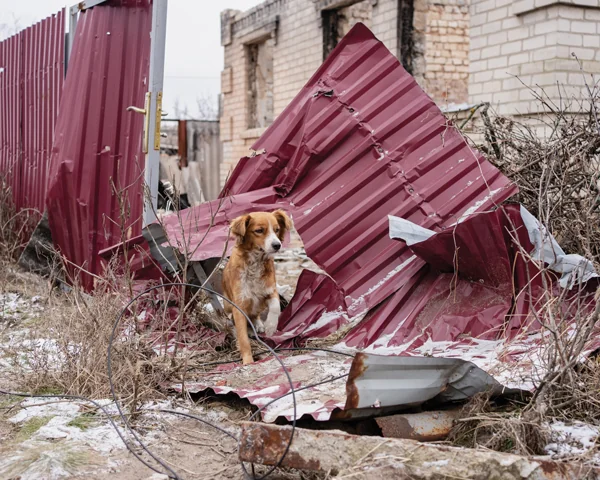
An abandoned dog picks its way through the rubble of war-torn Svyatohirsk, near the front line.
When the invasion blew in, the world watched an entire population on the move as millions fled west to escape Russia's fury. Train platforms and border checkpoints swelled with thousands of desperate evacuees, many clutching their pets. But legions were forced to choose, and many left their animals behind. Evacuating mid-war is "incredibly complicated and chaotic," Mook explains. "Crammed trains and buses rarely had room for people's animals, especially the bigger dogs. People faced impossible decisions under impossible pressure."
Ukraine is home to an estimated 5.5 million cats and nearly 750,000 dogs. No official count exists of how many actually made it out of the country — wartime records never include animals, and they almost always slip through the cracks, forgotten.
Mook joined forces with Hachiko in September 2022 and is now lending his expertise to scale up their pet-food operations in frontline towns and newly liberated communities where the need runs deepest. Many of the devastated settlements sit perilously close to the front lines and "have no electricity or running water," Mook says.
A Hachiko volunteer tops up a pet feeding tube in Chasiv Yar near Bahmut, Ukraine.
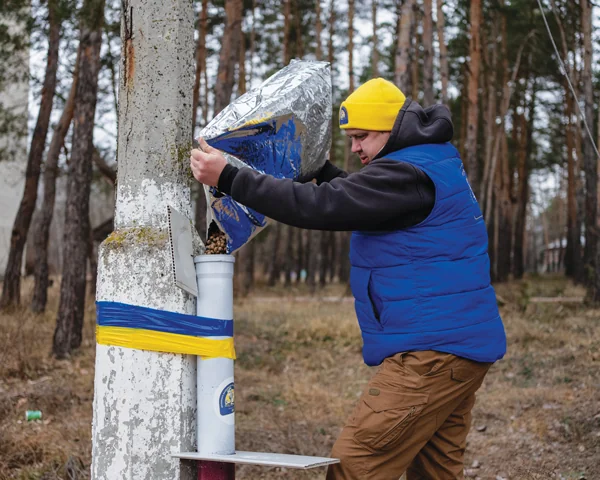
"Deeply traumatized by shelling and the deafening din of war, many of these animals are too frightened to approach food if people are nearby."
"Lots of these buildings and homes are wrecked or destroyed from the ferocious fighting and occupation," he adds. "In some places, residents had been living in their basements for nearly a year, surviving on aid while caring for their pets."
Based in the embattled Donetsk region's city of Kramatorsk, Hachiko stands as one of the only pet-relief groups operating in these "hard-to-reach and more dangerous areas," Mook says.
Hachiko founder Katya Onishchenko started stepping in for abandoned animals at the very outset of the war, when "hundreds of dogs and cats began showing up on our town's streets," she says. "After a couple of months, we watched animals start dying of hunger. We had to act."
From October 2022, the Hachiko crew began trucking larger loads of pet food to local residents caring for packs of animals left behind. "We set up a call center so people could phone us with their pet-food needs," Mook tells me. "With pet stores shut in these liberated towns, kibble and other supplies are in desperate demand."
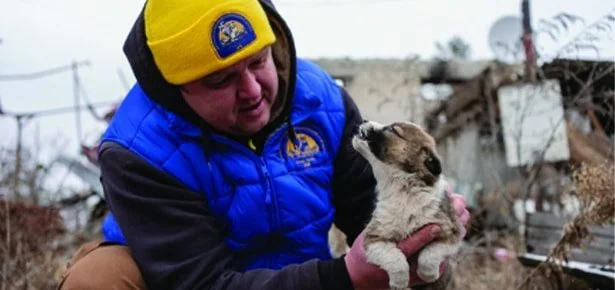
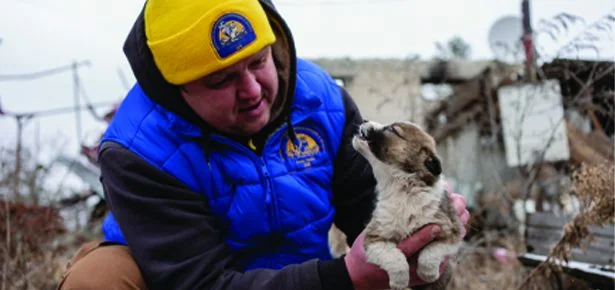
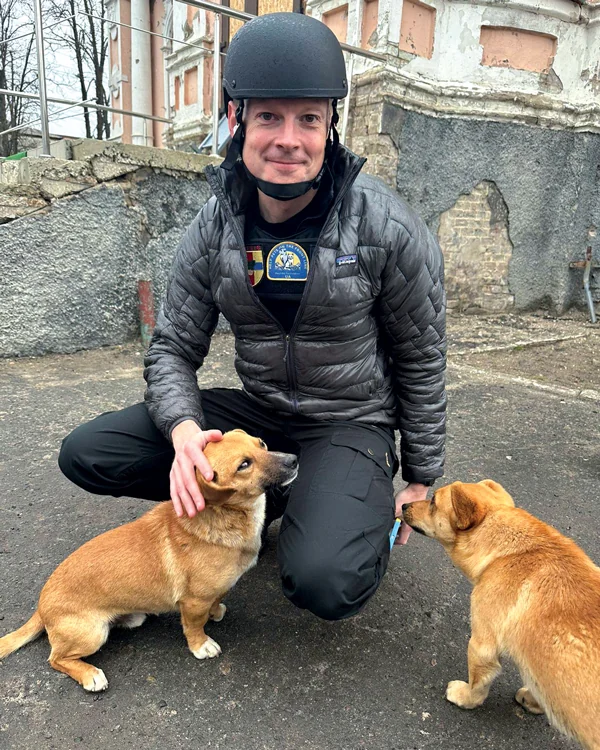
Nate Mook poses with two abandoned dogs while helping homeless pets along Ukraine's eastern front.
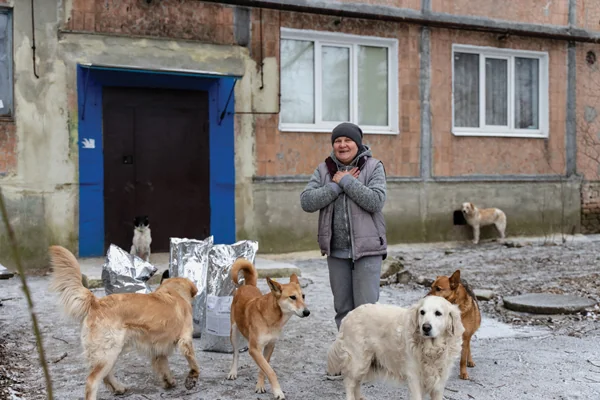
Mook recalled one of the "incredible humans" he's crossed paths with on food runs. "In Sviatohirsk we delivered several bags of pet food to a woman named Irina who spends her days caring for about a hundred strays and 38 cats around her home," he says. Before Hachiko arrived, "she was boiling groats and oatmeal to feed them during the occupation."
"It's heartbreaking to watch these animals suffer," Mook added. "But I'm also inspired by the humanity pouring into these efforts — people helping despite enduring the trauma and horror of occupation themselves." With most of these animals roaming the streets, Mook and the team decided gravity-fed feeder tubes were the fastest way to get food out at scale.
Battered by shelling and the overwhelming roar of combat, many of these pets "are sometimes too scared to approach the food if humans are around," Mook says. "That's exactly why the feeding stations work so well — they can eat on their own terms, without any force."
So far the Hachiko team has planted nearly 100 feeding stations across several cities and towns, delivering more than 11,000 kg of pet food. "We don't just fill them and vanish," Mook insists. "We're training local volunteers to manage and refill them efficiently."
The food itself is sourced locally through a partnership with Kormotech, Ukraine's largest pet-food maker. Based in Lviv, the company launched its Save Pets of Ukraine initiative at the war's start and has "delivered over 800 tons of pet food to animal-welfare groups around the country," says spokesperson Kateryna Kovalyuk.
A Hachiko volunteer delivers food to a local woman in Chasiv Yar who cares for a pack of dogs orphaned by the war.
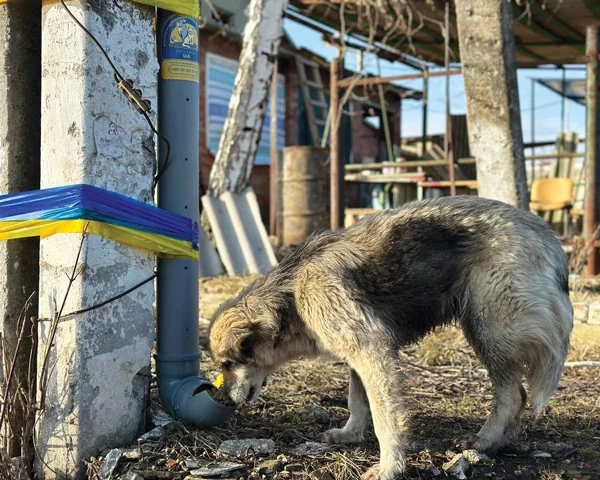
A homeless dog enjoys a meal from a Hachiko feeding tube.
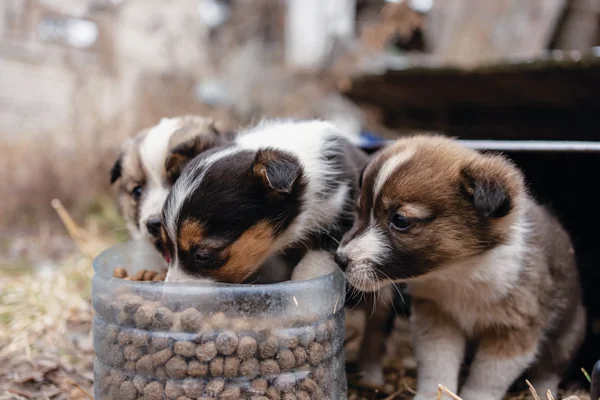
Several puppies eat from a pet feeding station set up by the animal NGO Hachiko in Sviatohirsk, Ukraine.
None of this near-conflict work comes risk-free. Russian missiles and artillery regularly target the very regions where Hachiko operates, and conditions are brutal. "We lean heavily on local partners and friends when it comes to our safety," Mook told me. "Sometimes we're escorted into more hostile territory by the military and can stay only briefly. Operating in Ukraine will always carry risk."
While recently working in the southeastern town of Orikiv, Mook and his team spotted a young dog feeding from one of the stations — a pup Mook remembered from months earlier. Back then he was "skin and bones," Mook says. Now, with the feeders at hand, "he's doing so much better!"
With no end to the fighting in sight, Mook plans to stay in Ukraine, installing more feeders while teaming up with Ukrainian vets to deliver medical care and shelter to the animals who need it most. "I know how vital pets are for emotional support," he says. "Dogs are woven into Ukrainian culture and into this war itself. It's truly a symbol of the humanity Ukraine is fighting to protect."
Originally published in the award-winning Modern Dog magazine. Subscribe today!
By clicking the arrow, you agree to our web Terms of Use and Privacy & Cookie Policy. Easy unsubscribe links are in every email.
keep the journal open