2,075 hearts
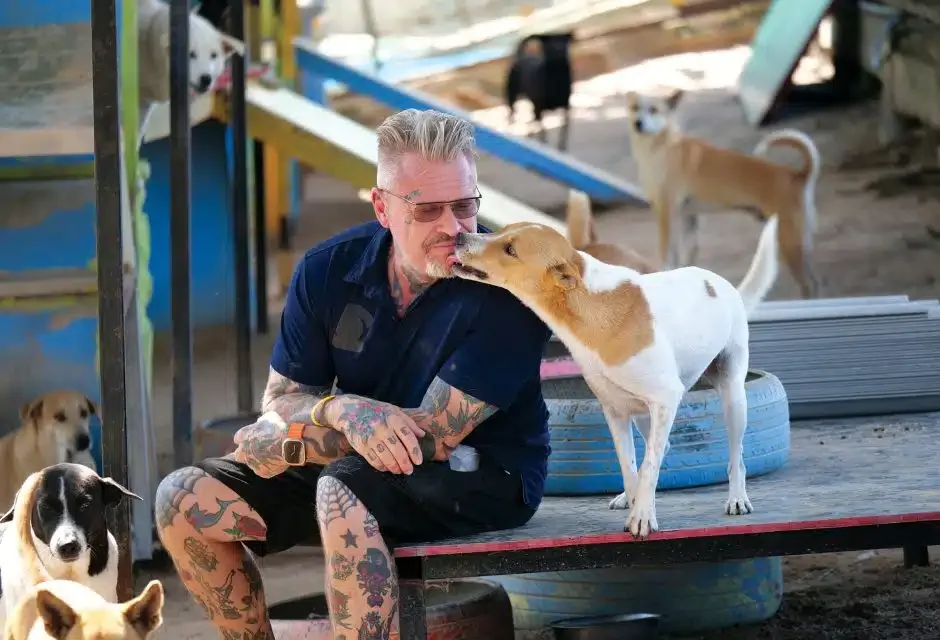
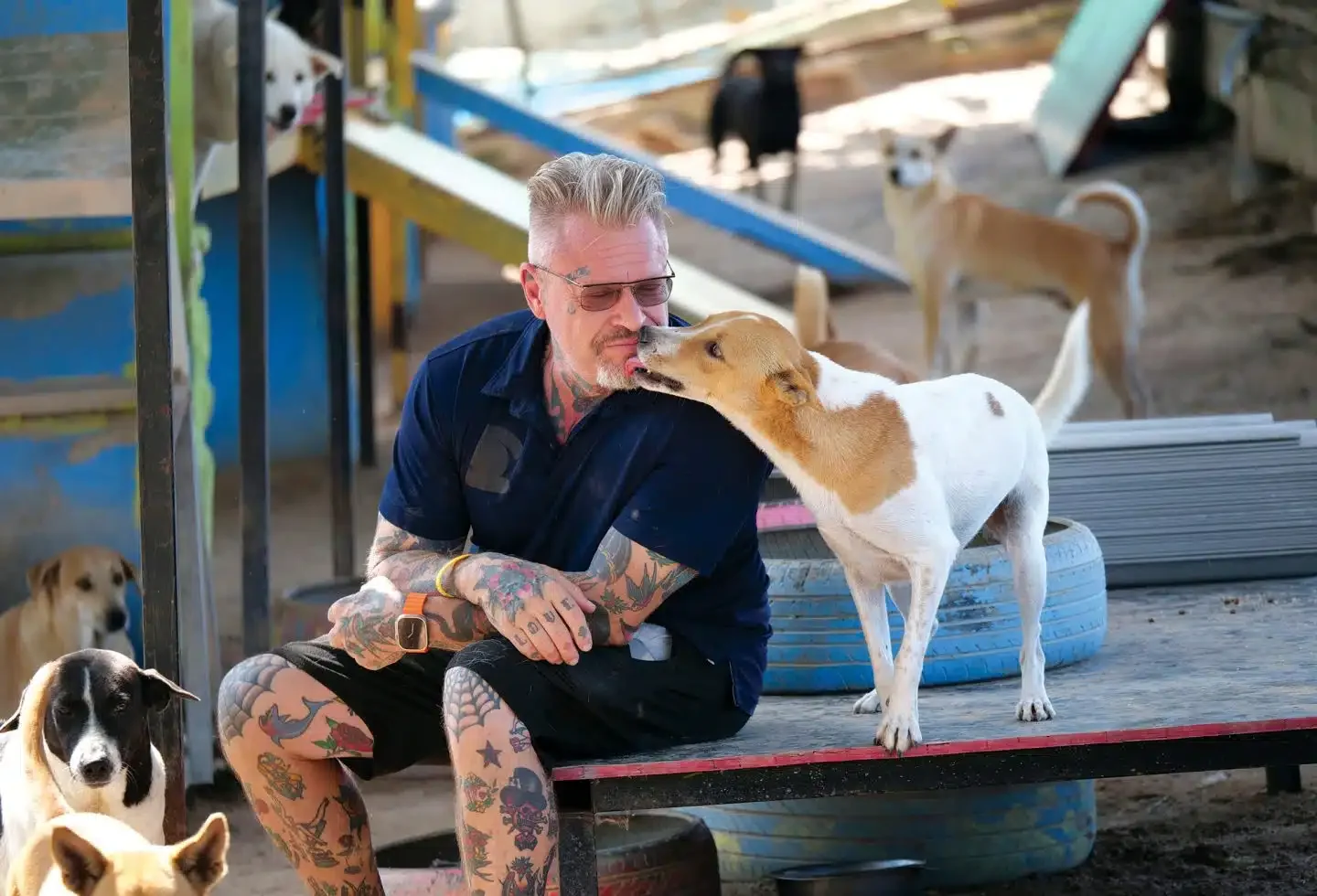
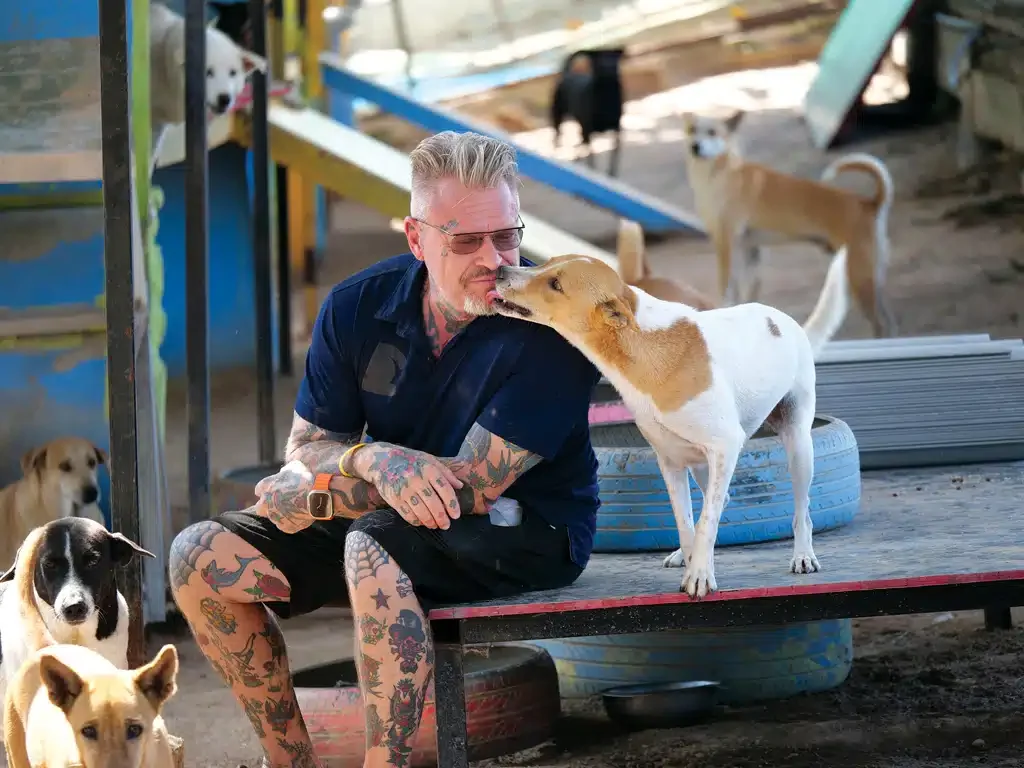
'I've always been a bit over the top,' says Michael J. Baines. 'I've got more than 200 tattoos. And 1,200 dogs.'
Baines co-founded and leads The Man That Rescues Dogs (TMTRD) in Bang Phra, Thailand, on Bangkok's outskirts. Together with his crew he tends 800 dogs on-site — plus another 400 street dogs his team have spayed or neutered and now feed and keep an eye on day after day.
Funds come entirely from animal lovers. 'Donations pour in from all over the globe,' he says. 'Keeping the foundation running costs about $1,600 US every single day.'
Dogs were never his plan. Raised in Sweden after being born in Scotland, he studied dance and theater — even getting a taste of the limelight as breakdancer Sugar Rock — before culinary school and a string of restaurant gigs around Stockholm. The scene's long hours and hard-partying culture dragged him into drug and alcohol addiction until he'd become someone he barely recognized. 'The deeper I sank into substances, the further I drifted from compassion,' he writes in his 2024 memoir, Home. Made.
When a coworker who kept vacationing in Thailand and always came back glowing invited him along, Baines went. 'Thailand was a mini detox, pure relief for my body,' he recalls in the book. 'I flew back to Stockholm and my old habits, but I'd tasted freedom, and I started craving that as badly as I'd once craved the drugs.'
He started visiting Thailand whenever he could, and within a few years landed a restaurant-manager job there. He moved for good in 2002 and quit drugs instantly, though shaking a decade of alcohol dependence took far longer. 'It was years before temptation left me alone,' he writes. 'I faked dependability until it stuck, and work became the scaffolding I rebuilt myself on.'
Everything started with one stray. 'A dog showed up behind my restaurant in awful shape. I fed her daily for five days, earned her trust, scooped her into my truck, and drove to the vet,' he says. She recovered into a healthy, beautiful dog, and Baines placed her with a loving family. 'Seeing her well and knowing I'd made that possible filled me with satisfaction, connection, and hope — feelings I didn't know existed. I'd kept my promise to her, and realizing I could change her story made me see other endings I could rewrite,' he writes. 'Mamuang was my first rescue. And that feeling beat drugs, alcohol, even love hands down.'
By 2018 he'd sold the business to live for the dogs: 'I decided to trade cooking for people and cook for dogs instead.'
He couldn't un-see the other thin, starving dogs around him. He began feeding them — more every day — while juggling the little restaurant he'd opened in 2013. 'The plan was 80 to 100 dogs a day plus my restaurant,' he recalls. Then a whistleblower tipped him off about the horrific local dog pound. Baines went to see it, was sickened, and took it over. For a while he ran both pound and restaurant, until it became too much. Something had to give, so in 2018 he closed up shop and went all in: 'I decided to cook for dogs instead of people.'
Through years of relentless expansion, Baines' sprawling 8,000-square-metre sanctuary has swelled into the permanent address of roughly 800 wagging residents at once. Each and every one demands a mountain of kibble, daily exercise, regular grooming, and round-the-clock veterinary care. To keep the engines humming, he's assembled a devoted crew of 45 hard workers — including two full-time veterinarians — and regularly flings the doors open to volunteers and veterinary interns flying in from around the globe. 'It works for us,' Baines grins. 'It works for them. And best of all, it works for the dogs.'
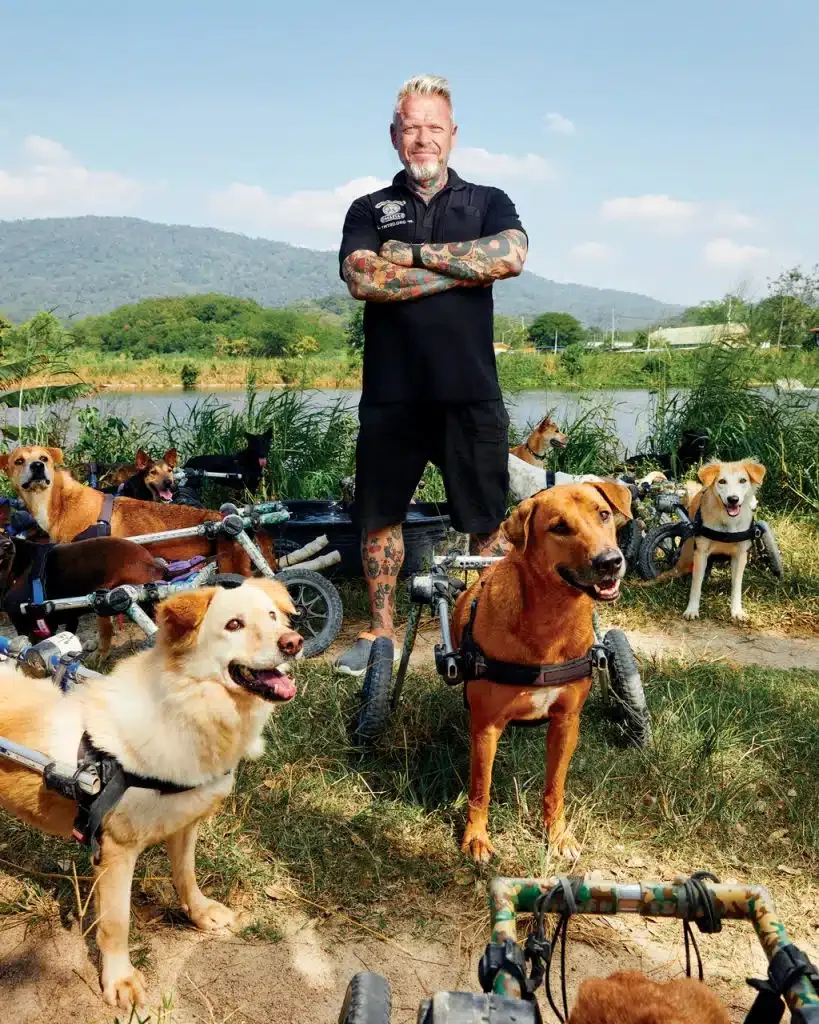
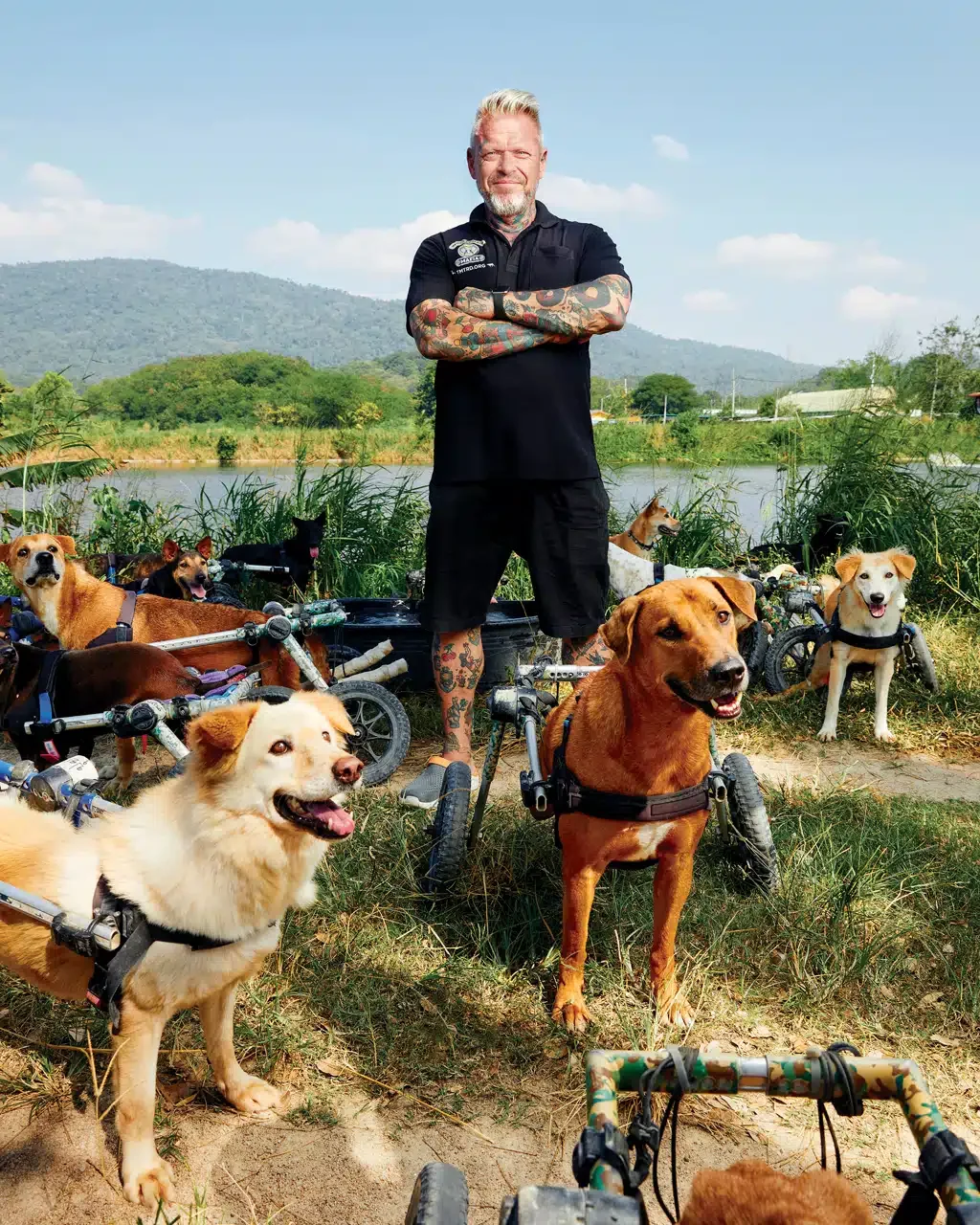
One TMTRD crew has gone viral again and again on social media: the Wheelchair Mafia. 'We've got about 44 dogs in wheelchairs rescued since 2016, and they're a loud, happy bunch,' Baines says. 'They've no clue they're paralyzed.' And they refuse to mope. 'They just keep living.'
'Around 44 of our dogs live in wheelchairs… they don't realize they're paralyzed,' and there's no room for self-pity. 'They charge on with their lives.'
These tireless pups count down to their twice-daily gait at 6 a.m. and 1:45 p.m., cruising on tough rigs built by US outfit Walkin' Pets. The chairs aren't cheap, but the payoff is huge. 'I want nothing but the best for our dogs. They can roll over ditches and rocks — they can even swim in them,' Baines says.
Film one of the Wheelchair Mafia suiting up for a stroll and you'll catch their pure delight. 'You can feel the excitement buzz as each dog gets strapped in, like a pit crew prepping a race-car driver,' Baines writes. 'They queue up and take their marks at the start line. It's surreal — an F1 grid where everyone wants the lead. Within a minute they find their stride and slot into formation beside staff, volunteers, and guests… Their joy never dips, and they're not shy about showing gratitude. Nothing beats the sight and sound of 44 dogs celebrating that nothing can stop them.'
Baines invites anyone moved by the Wheelchair Mafia clips on TikTok, Instagram, Facebook, or YouTube to drop by and see the crew move in the flesh. 'You realize a dog isn't done with life just because they lost a leg or can't walk,' he says. Three of Baines' own dogs are missing a leg each. People keep pitying them — happens constantly — and he always answers: 'Hey, you only have two legs.'
He gets fired up on spay and neuter as the key to reining in strays. TMTRD's clinic performs the surgeries, plus vaccines and cleanings, priced to cover costs so locals actually take care of their animals. Failing to do that, Baines says, just 'hands the problem to us.' All 400 street dogs on the daily route have been fixed and get vet care whenever needed.
Asked why those 400 stay outside instead of inside the shelter, Baines is blunt. 'One, we don't have the space. Two, most of those dogs live somewhere they're safe — it's their home, and we can't forget that.' A staffer spends about six hours a day driving the loop to check in and feed. 'It's my original route,' Baines says — and some dogs he fed all those years ago are still alive. 'Amazingly.'
He's lived with as many as 18 dogs at once and shares his place with 15 today, but swears he's done taking more. 'I always say, once this dog passes, that's it, no more,' he laughs. 'Ask me again in a year. I can't say no. I love every one of them.'
'Could be thousands of dogs around the globe still waiting in shelters for someone to come through.' Roughly a million-plus shelter dogs are put down in the United States each year, he notes. 'So we beg people: adopt locally.'
As much as he dreams of homing every dog at TMTRD, Baines approves adoptions with extreme care. 'People ask, but not everyone gets approved. If a dog's life would be worse than it is here, I won't rehome them.' He also refuses to send dogs abroad. Instead he returns to that sobering stat — over a million US shelter dogs euthanized annually — and repeats his rallying cry to adopt close to home.
Money is a constant scramble. 'Some months are bad. Some are better,' he admits. Donations cratered during COVID before a viral dog video revived them. Clips of the Wheelchair Mafia always lift funding, and so do pet-site features. He's still holding out hope that a sequel to the 2013 documentary The Man That Rescues Dogs — made by Swedish filmmaker Anna Tjernström and on YouTube — might one day materialize.
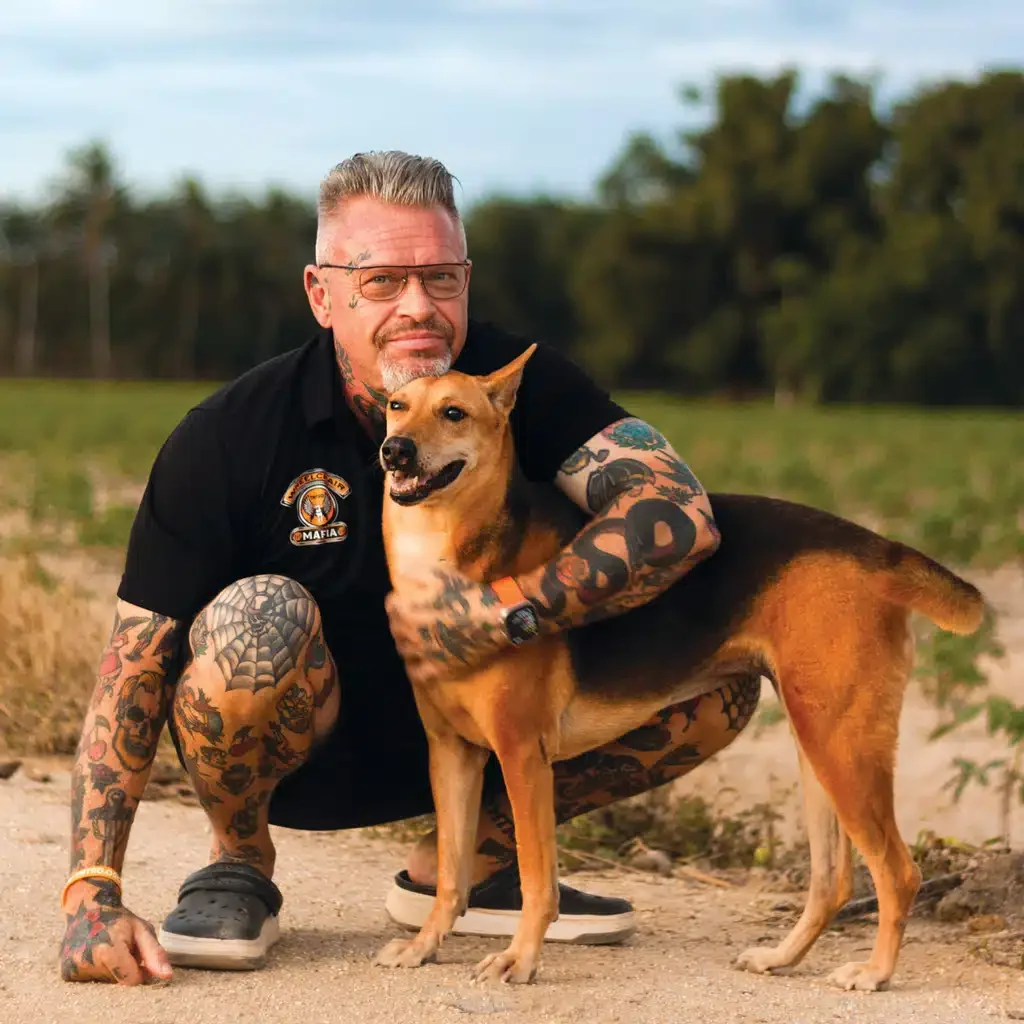
Baines' memoir, Home. Made., doubles as the debut title from Witchcraft Creative, a social enterprise that helps nonprofits raise money while telling their own stories. When founder Samantha Wilson came calling, Baines only said yes because 70 percent of royalties flow back to his foundation. 'Writing it was an emotional rollercoaster,' he says. 'I had to dig deep.'
He plans to widen the sanctuary by 2,000 more square metres, then simply hold steady. 'No more expansions, no branches, no going abroad to do this everywhere. We have plenty of dogs in our own area who need us, and I won't risk our current dogs and staff,' he says. 'I just want the dogs safe and the staff and foundation set for years ahead.'
The hours are brutal, but it's worth it. 'This is my baby. It's my foundation and I have to look after it. It's work, sure, but it's not a job.'
A one-time breakdancer, chef, addict, and author who finally met his purpose as The Man That Rescues Dogs believes fiercely in fresh starts — especially for the misunderstood and thrown-away. He writes of a scared but sweet pit bull rescue named Blueberry: 'He wasn't a menace. He was misunderstood and mistreated. I now see the thread that ties together the misfits of The Man That Rescues Dogs — animal and human alike.'
Several TMTRD staffers have pasts as tangled as Baines', which makes them naturals at caring for dogs the world discarded. 'I think it's all about second chances,' Baines says. 'We hand them a second chance. And life handed one to me.'
'But the dogs are so innocent and lovely. I adore bonding with them. They're honest. They live one day at a time.'
Pressed on why dogs became the center of his universe, he goes quiet, replaying his life's twists. 'At a crossroads you pick a path. I could've ignored that first dog. I could've kept my restaurant. But the dogs are so innocent, and they're wonderful creatures. I love connecting with them. They're honest and live in the moment,' he says. 'I can't stop now. How could I?'
*Want to help? Visit tmtrd.org to donate or volunteer at the sanctuary, and follow @tmtrdorg on Instagram to watch the Wheelchair Mafia and friends.
This story first ran in the award-winning Modern Dog magazine. Subscribe today!
keep the journal open