4,508 hearts
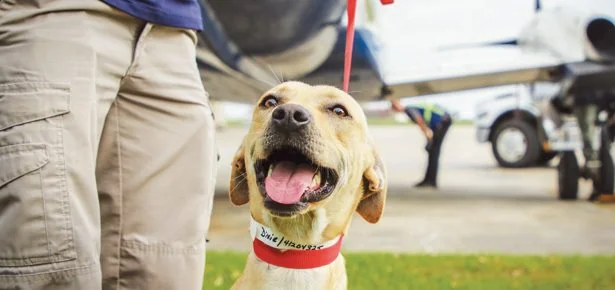
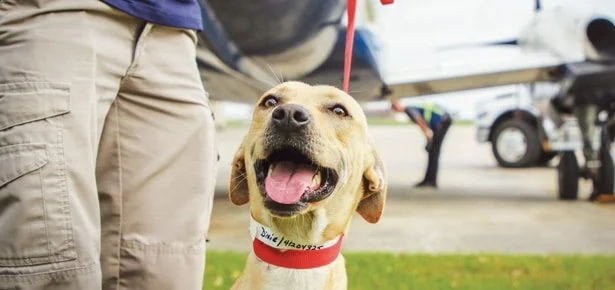
More than 600 pets were flown from the Hawaiian Islands to Seattle in the biggest pet rescue flight in history—a mission dubbed Paws Across the Pacific. It's hardly the first flight Wings of Rescue has organized, but it's certainly the largest.
Ric Browde, CEO of the non-profit, has been airlifting animals out of harm's way—disaster areas and overcrowded shelters across the U.S.—to safety since joining Wings of Rescue in 2013. Working with partners like Greater Good Charities, the ASPCA, and Humane Societies, Wings has now flown more than 40,000 pets to safe havens across the U.S. and Canada.
In fact, it's the only donation-based charity to move this many pets to safety by air.
In the first ten months of 2020, Wings of Rescue moved a staggering 8,142 pets from disaster zones and packed shelters across 27,942 miles on 105 flights—and delivered 40,290 pounds of humanitarian aid to earthquake-damaged shelters in Puerto Rico. All that despite being grounded for 10 weeks because of COVID-19. Ric runs a well-oiled machine.
Most Wings flights carry around 100 pets at a time. Their record evacuation—before the Hawaii run—was 278 animals rescued from Memphis to shelters in the Pacific Northwest.
'It's an expensive ride, but our passenger satisfaction rate is better than any other airline. And our passengers are cuter, friendlier, and often better behaved than those flown by other airlines,' Ric says, laughing. 'Once we hit 3,000 meters [above sea level] all the dogs fall asleep, like someone waves a magic wand. And when we start our descent, it's like having a plane full of three-year-olds asking, "Are we there yet?" Then they all wake up at the same time.'
From January until October 2020, Wings flew 102 times—taking 10 weeks off for COVID. 'We have six volunteer pilots. Their leased PC12 plane (a single-engine turboprop) has been grounded, so Wings is chartering cargo aircraft until another PC12 becomes available. Sure, it's way more expensive to charter, but consider what you can do with that money—how many pets can be saved,' says Ric.
Ric rides 'shotgun,' going along on most of the big missions. His job is more about animal care and logistics; he tends to the pets in flight, sometimes using Rescue Remedy and homeopathic treatments to soothe his precious cargo. Most dogs behave well in their crates, 'but if we see a dog getting fractious, disruptive, and anxious, chewing at their crates (sometimes Pit Bulls get too hyped up) we will respectfully say sorry, they cannot be transported.'
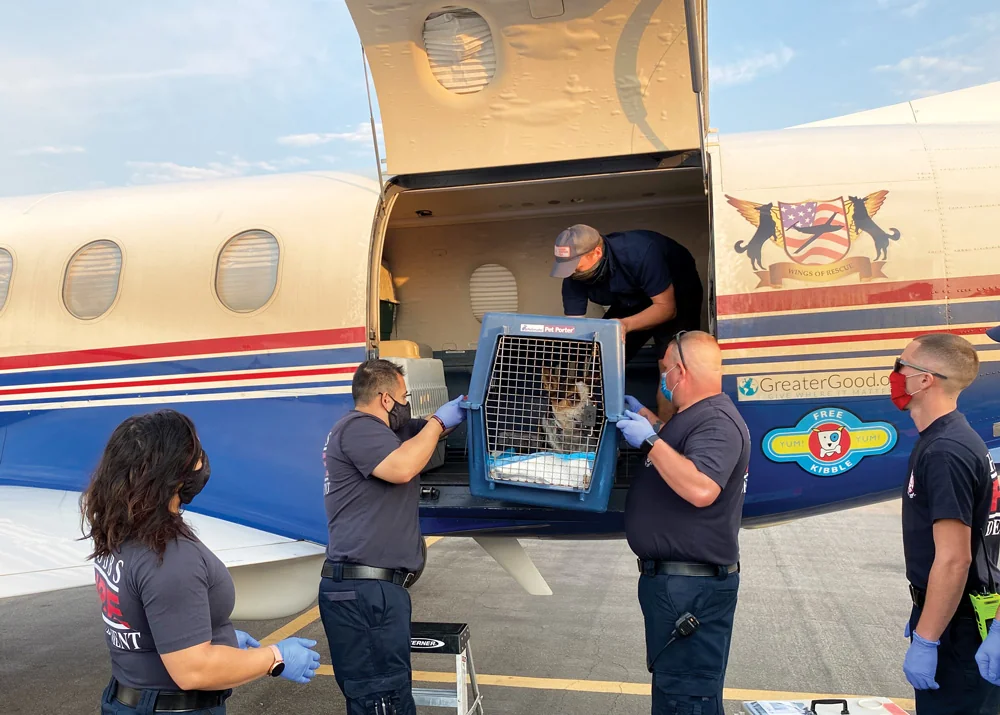
The PC12 sometimes needs refueling, such as the flight to Victoria, Canada last July from southern California. 'We want the dogs to be as comfy as possible, so we looked for the coolest place, temperature-wise, to land. The fastest route was Arizona, but every step of the way we think about dog comfort—including bedding in crates and pilots with a level of compassion and care—so we took a short detour to San Diego. Ideally, we want pilots with their own pressurized planes. We want to be able to fly over mountains and don't want pets with oxygen masks. Pets are in the cabin with us on all the PC12 flights, rather than cargo, so they are literally breathing the same air as us.'
Here's how Ric figures out how many dogs can fit on the plane: 'It's more about calculating the volume of crates, and we base dog weight on a point system. For instance, a 20-pound-or-less dog is one point; a 40-pound-and-above dog is six points. A great Dane would be 10 points because it needs 51 inches of vertical space. The PC12 can handle 106 points—maximum.'
As a donor-funded charity, Wings of Rescue leans on the generosity of strangers. 'I am amazed when people ask me why I do this,' Ric says. 'Everyone has the power to do good, and if everyone did that we could make a difference in this world. We support any rescue that is done responsibly. So get off your couch and help someone out.'
Greater Good Charities CEO Liz Baker, all smiles with her freshly adopted fur kid, Hilo. (Image via Greater Good Charities)
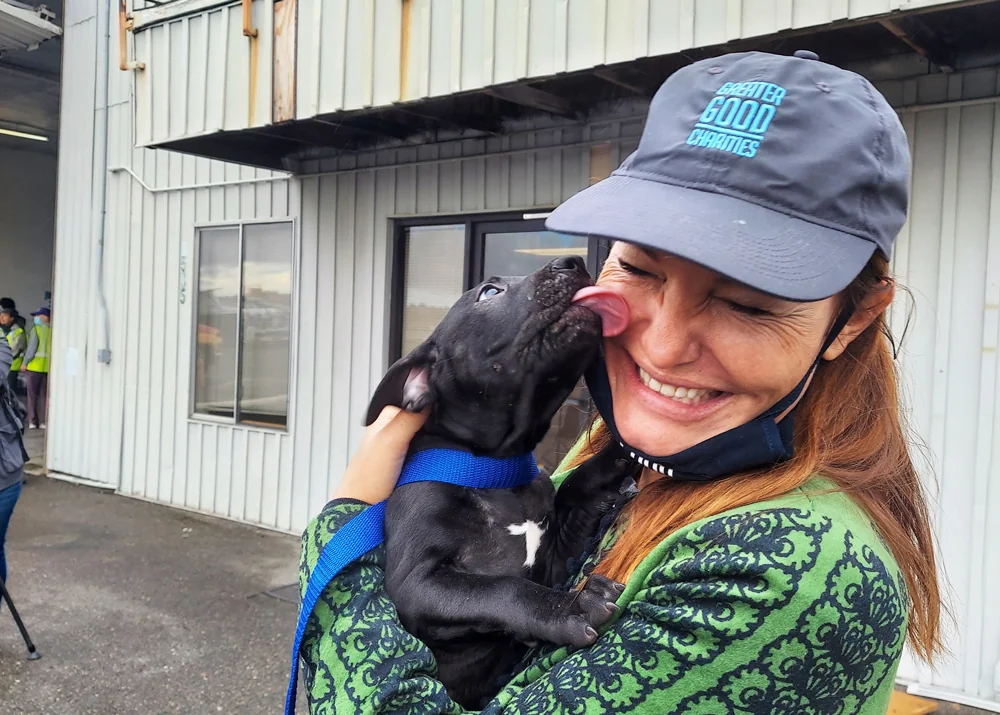
Paws Across the Pacific was nothing short of a miracle. The coordinated effort was led by Greater Good Charities, Wings of Rescue, and the John R Peterson Foundation, involving more than 100 people and several pet shelters on both sides of the ocean, as well as the Hawaii Veterinary Medical Association to ensure the safety and health of the pets aboard.
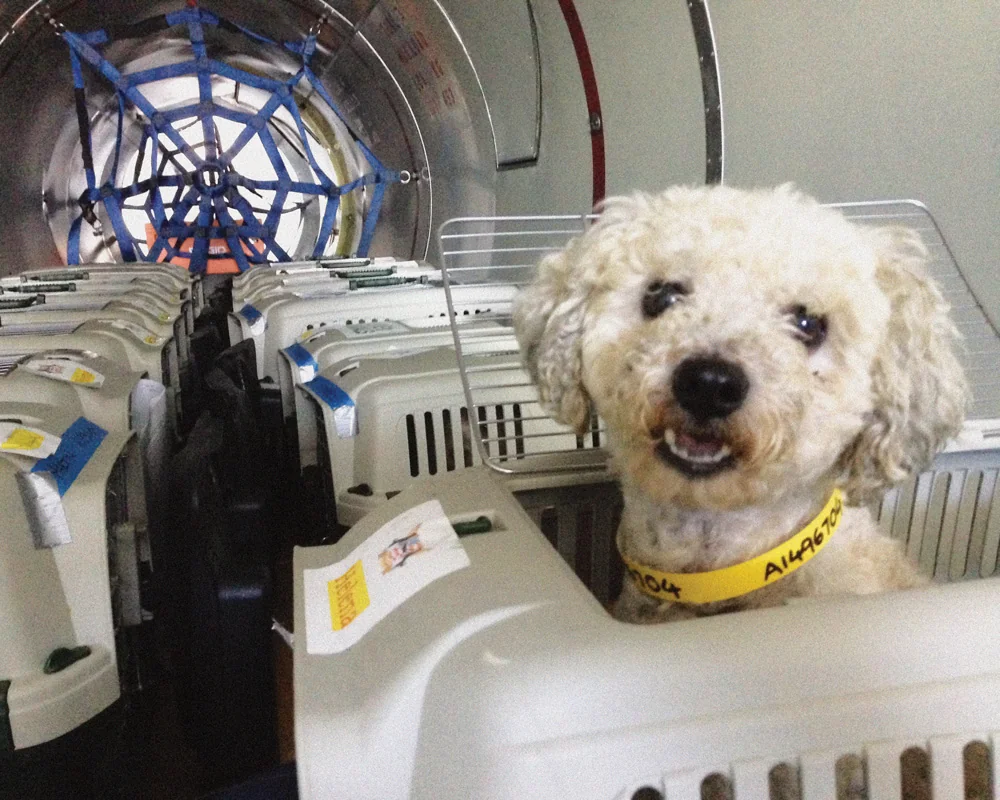
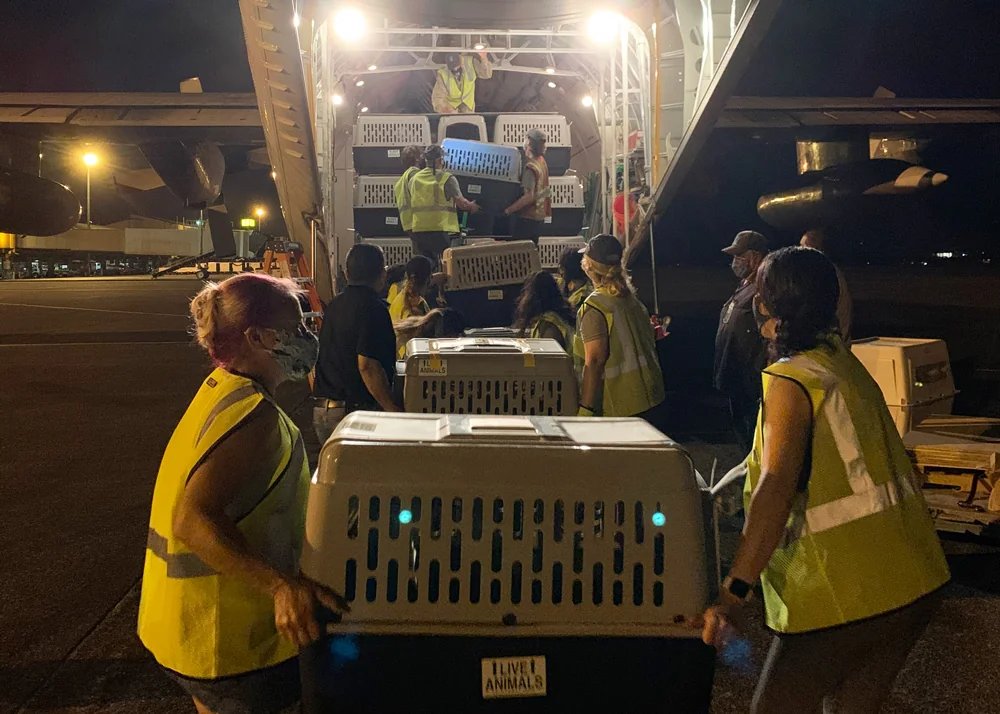
The mission was also more complex than Ric's usual runs, loading an average of 150 pets into a few planes. Greater Good Charities' shelter experts and engineers designed the load for stability, working alongside veterinarians and cat behaviorist (and Greater Good board member) Jackson Galaxy to keep pets comfortable and safe in flight. Crates were stacked on pallets and netted to keep them from shifting. Pets were collected at five islands, so the team's biggest challenge was loading quickly, then flying a little over seven hours across the Pacific to Seattle.
Seven Hawaiian shelters sent pets to roughly 12 or so receiving shelters. 'The Hawaii government has been wonderful, cutting through red tape getting vehicles to the airport on time,' adds Ric. 'They really wanted to make it work.'
'At the end of August I got a call from the John R. Peterson Foundation, asking what I needed during the pandemic,' says Mirah Horowitz, executive director of Kauai Humane Society. 'I needed a plane.' Her pipe dream turned into a statewide mission that came together almost overnight. The Foundation called on Wings of Rescue and Greater Good Charities—the latter securing transport clearances through the state via its disaster response program.
Sisters Phylis and Moki, age 10, were on the flight. The hound-mix girls were surrendered by their owner in July. 'They were so sweet and favourites of the staff and volunteers,' says Mirah. 'We have mixed emotions... they will be missed, but we are happy they are getting adopted. Two other sisters, Cindy and Lindy, are also hound mixes that we had for a long time. They were both strays and so shy they hid at the back of the kennels. Now they come up to us and walk on leashes—we are so excited for them.'
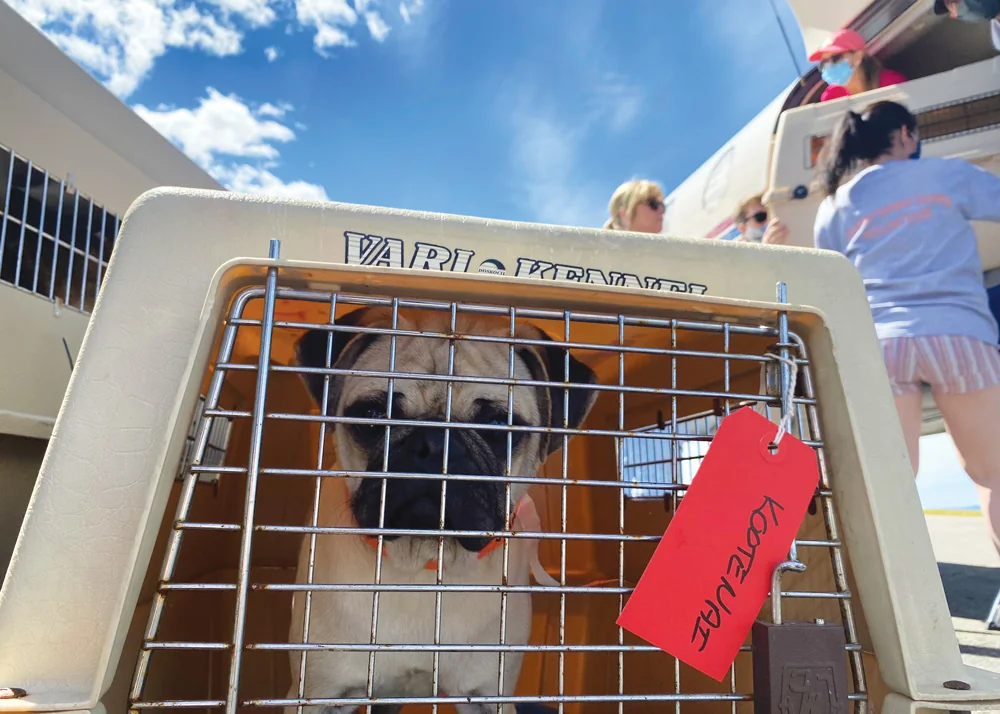
'We are so grateful for everyone who made this rescue flight possible—they are lifesavers. We do everything not to euthanize, but our shelter is full. Now we have room for feral and street animals—I think our shelter will fill up in no time.'
'Ric has given all receiving seven shelters a list of animals with their basic information, including size, age, and breed mix. We don't discriminate, but we usually take a mix of small breeds and senior dogs, and there are always some bully breeds,' says Lisa Hockins, PAWS Shelter Operations Manager in Lynwood, Washington. She's been at PAWS for 14 years and has worked with Ric for most of that time. 'All the shelters work together, and if a few animals aren't ticked off the list, Ric will assign them. It always works out.'
'Any Wings of Rescue transport is well organized—no hiccups,' adds Lisa. 'We all meet at the airport where everyone is labeled. We collect the animals, move them directly to the shelters, and do health checks.'
On an earlier mission in July 2020, Wings of Rescue flew 28 dogs from Mexico to Victoria, B.C. 'A friend in Bellingham, Washington got in touch with Wings, and two of their pilots, Kale and Anji Garcia in Bend, Oregon, contacted me—they made it happen,' says Marlene Davis of Mex-Can Pet Partners in Victoria.
Kale and Anji have their own plane and have volunteered with Wings of Rescue since the beginning.
'They worked on the logistics that the dogs needed to come to Canada, such as vaccine worming, flea and tick treatment—they do their homework. And they don't want to pass on a problem such as behaviour and health issues. Ric is extremely conscientious.'
'The only problem with Chesley is that everyone wants him,' says Deb Wellburn, a corporate flight attendant who adopted one of the Wings transport dogs. It was love at first sight, even through the crate. She was working at the Shell AeroCentre, which offers corporate aircraft services at Victoria airport, when Wings landed. She watched a volunteer open a crate (the dogs had just been taken out of cargo). 'The volunteer took this beautiful dog for a walk. His top half is Golden Retriever and the bottom half Corgi, perfectly imperfect,' says Deb. The volunteer told Deb she had to apply to adopt through Mex-Can Pet Partners, which she did that very night. 'I can't say enough about Marlene Davis and her rescue. She excels in finding forever homes. Chesley is our first rescue and so adorable, so willing to please. We don't know much about his background, except Marlene said he was found on a rooftop with another dog—they were abandoned. We were surprised at how well he gets along with everyone, including people, horses, and other dogs. He walks by our side, loves to roll in grass, loves routine, climbs onto our boat with no problem, and he always seems excited to be with us.'
'I now encourage people to apply for a rescue dog. A pilot and two other workmates have already applied. As well, I talked to my boss: he said Wings of Rescue can always park here. When the dogs landed it was a super-hot day. A tent was pitched outside, but my company let everyone come into our air-conditioned building. Even our cleaning lady was so excited—she didn't care if they piddled. And it was wonderful talking to people being united with their pets. I can't wait for the next rescue!'
Recently, Wings of Rescue, in conjunction with the Sato Project, flew 116 rescue animals from Puerto Rico after the horrific earthquake left shelters dealing with damage or overcrowding after owners surrendered their pets. The flight stopped in Delaware, New Jersey, and Florida, and the animals were relocated to shelters in those states as well as Pennsylvania and New York. 'It's goosebumps and tears. The minute you hear those doors open. It's just an incredible feeling knowing those animals may not have been alive had it not been for that mission,' Linda Torelli, Marketing Director of the Brandywine Valley SPCA in Pennsylvania, told Fox News. That SPCA took in more than 30 dogs.
'There's a huge variety that came up on the flight. We've got little babies all the way up to adults of about five to six years old,' said Linda. After reading about the rescue, the Oakley family went to the shelter and went home with Zule—the first Puerto Rico earthquake survivor at the shelter to find a new home.
'It just makes me feel good to rescue dogs,' Julie Oakley told Fox. According to SPCA officials, the animals would likely have been euthanized because of limited space and a lack of food and water on the island.
Wings of Rescue is a donation-based charity that runs large-scale transports of at-risk shelter pets from overcrowded shelters and disaster areas to brick-and-mortar shelters with empty kennel space. No local shelter pets are displaced by the flights. Since launching 'Let The Fur Fly' in 2013, Wings of Rescue has flown more than 40,000 pets to safety. To donate, visit wingsofrescue.org/donate.
By clicking the arrow, you agree to our web Terms of Use and Privacy & Cookie Policy. Easy unsubscribe links are in every email.
keep the journal open